
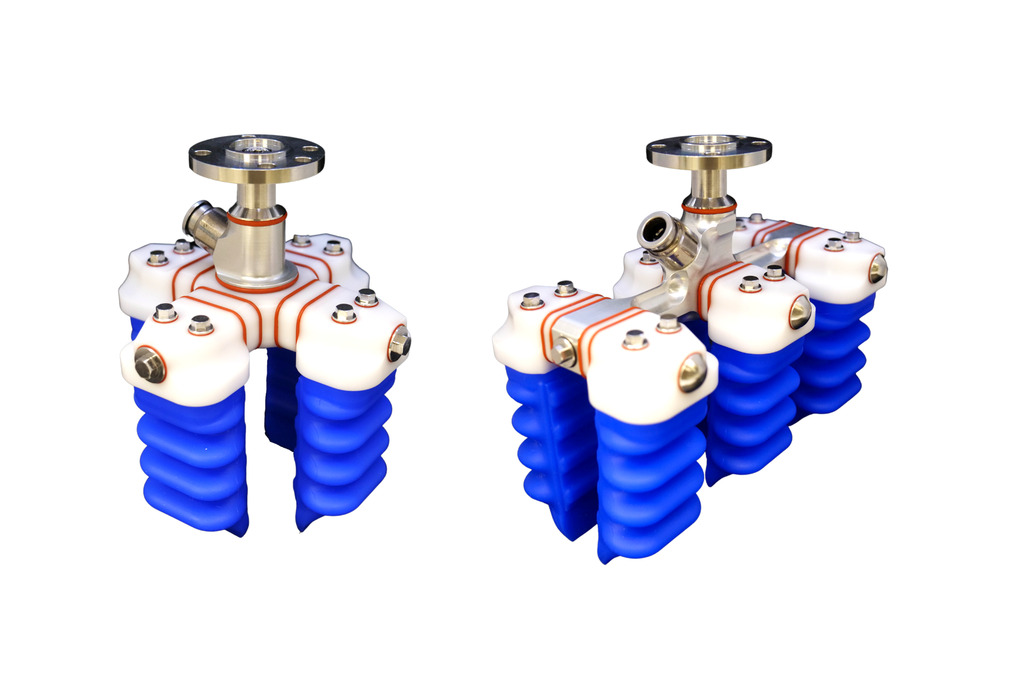
Finger Grippers mGrip
- Load capacity up to 10 kg
- Workpiece width up to 300 mm
- Gripping speed up to 120 picks per minute
- Gripper made of FDA-compliant materials (POM, silicone, stainless steel), protection class IP69K
Show category
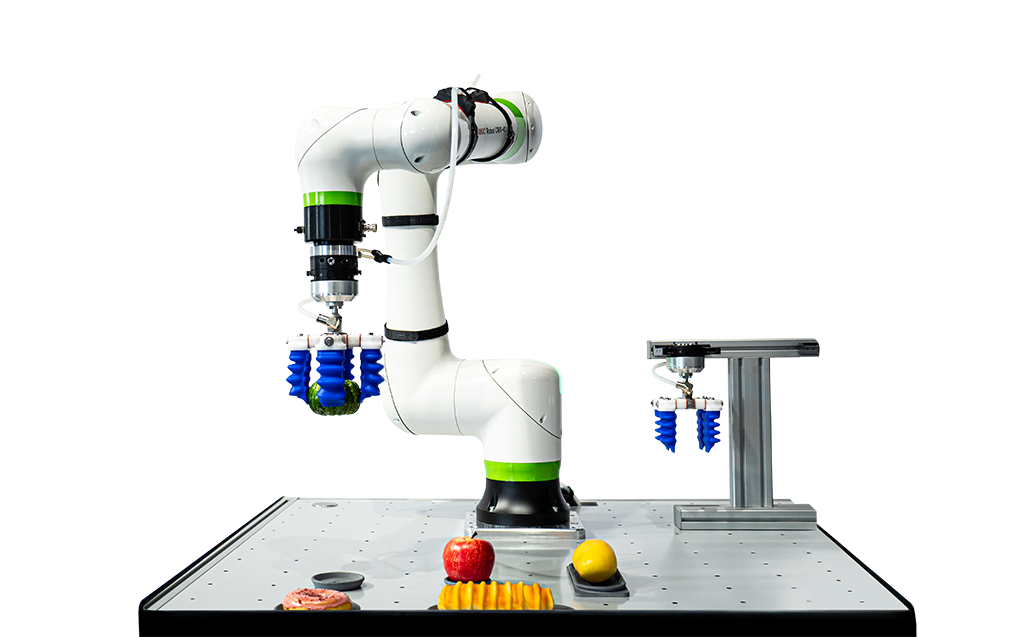
The central application platform for food automation – Over 100 practical application examples featuring more than 70 different products. Is your product among them?
An adaptive gripper is a flexible gripping system in automation and robotics technology that adapts to different shapes, sizes and surfaces of workpieces. Unlike rigid grippers, an adaptive gripper independently recognizes or compensates for deviations, ensuring safe and gentle handling even with varying or unknown objects.
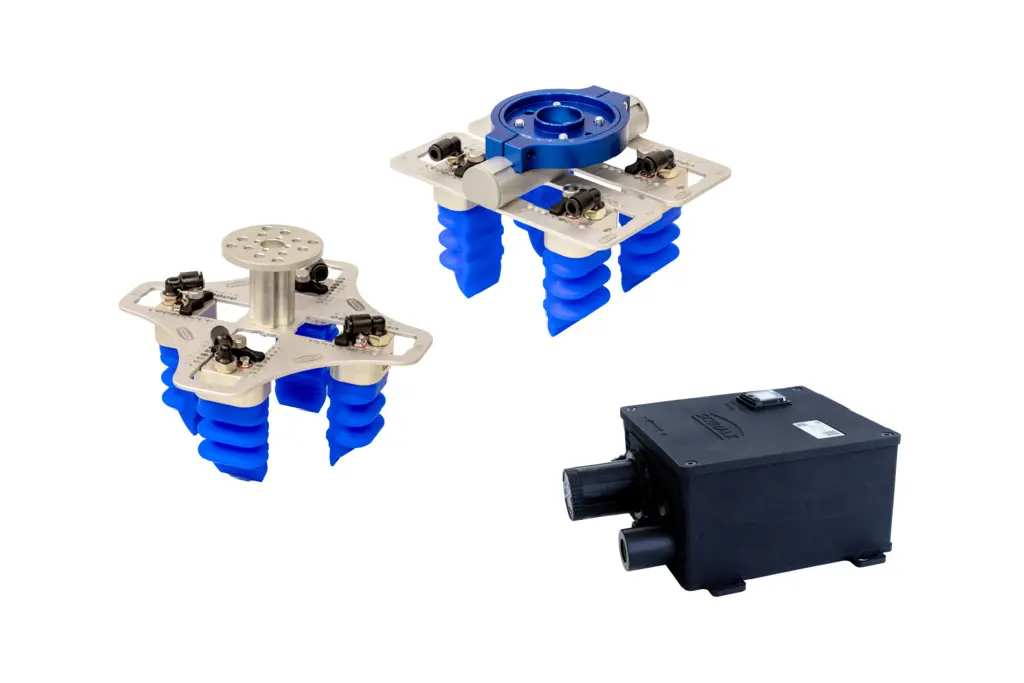
Schmalz offers the finger gripper mGrip and the finger gripper mGrip Basic.
Both grippers work with flexible silicone finger spare units that adapt to different product shapes, sizes and surfaces, enabling gentle handling.
The finger gripper mGrip is suitable for automated applications with the highest hygiene requirements – fully washable for meat, fish and dough pieces.
The finger gripper mGrip Basic impresses with its almost infinite configuration options and variable finger modules. Ideal for processes where workpieces or applications change – in food processing, agriculture, packaging and logistics.
Compare now!
Yes, when using the FDA-compliant finger modules, it is suitable for direct food contact.
This means that dry food products such as vegetables, fruit, baked goods and confectionery can be handled safely.
Yes, absolutely. The finger gripper mGrip Basic even has the spacing parameters engraved on it, which are easy to read. This means you can easily select the right configuration for the finger gripper mGrip .
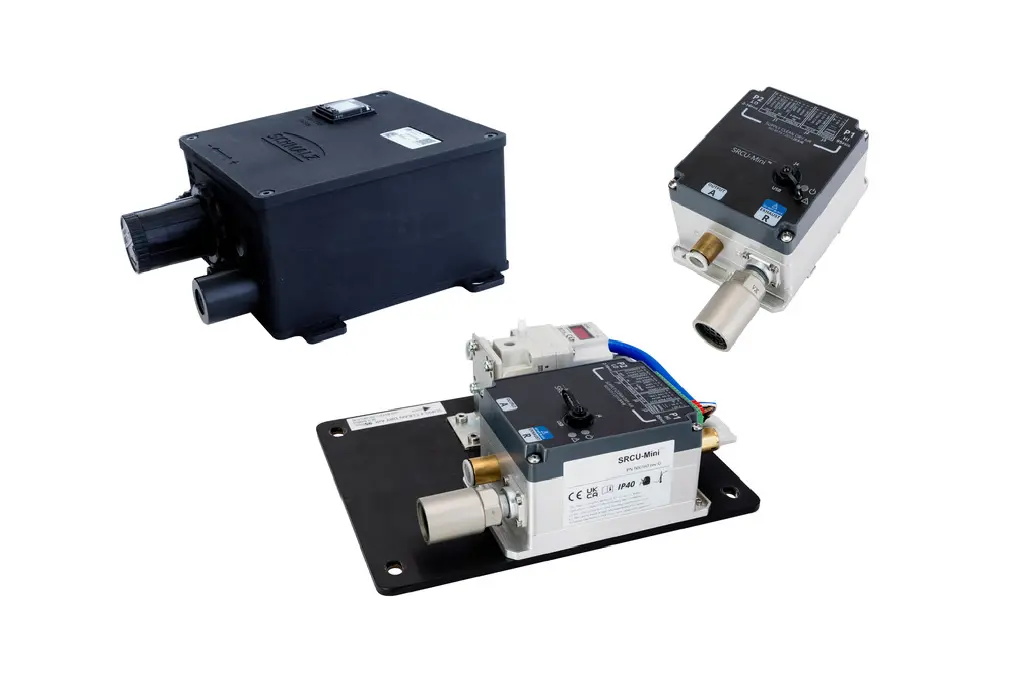
In addition, the control modules SRCU Mini and SRCU Basic are compatible with both gripper variants. The entire finger gripper portfolio is engineered to work together.
A control module determines how a finger gripper is operated, for example with which gripping force, which opening angle and which sequence. It forms the interface between the finger gripper and the system or operator.
Manually adjusted control module, if
Automated control module when
All finger grippers from Schmalz enable seamless integration into common industrial robots. They are connected via flange adapters, which means they can be used regardless of the manufacturer and without special designs.
We offer adapters in the sizes 20 mm, 31.5 mm, 40 mm, 50 mm and 63 mm.
There are three simple ways:
A pneumatically controlled finger gripper requires minimal maintenance. In practice, three simple measures are sufficient:
Yes. Schmalz finger grippers are also suitable for wet, oily, or slippery food surfaces. The key is the design of the gripping system.