Schmalz

Clamping fixture

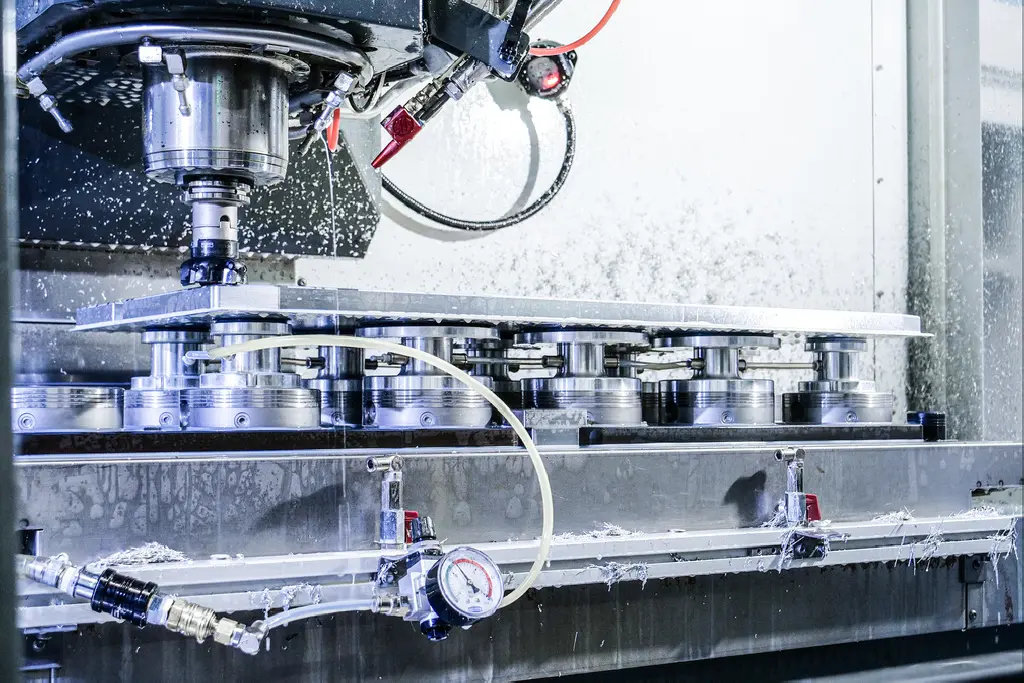
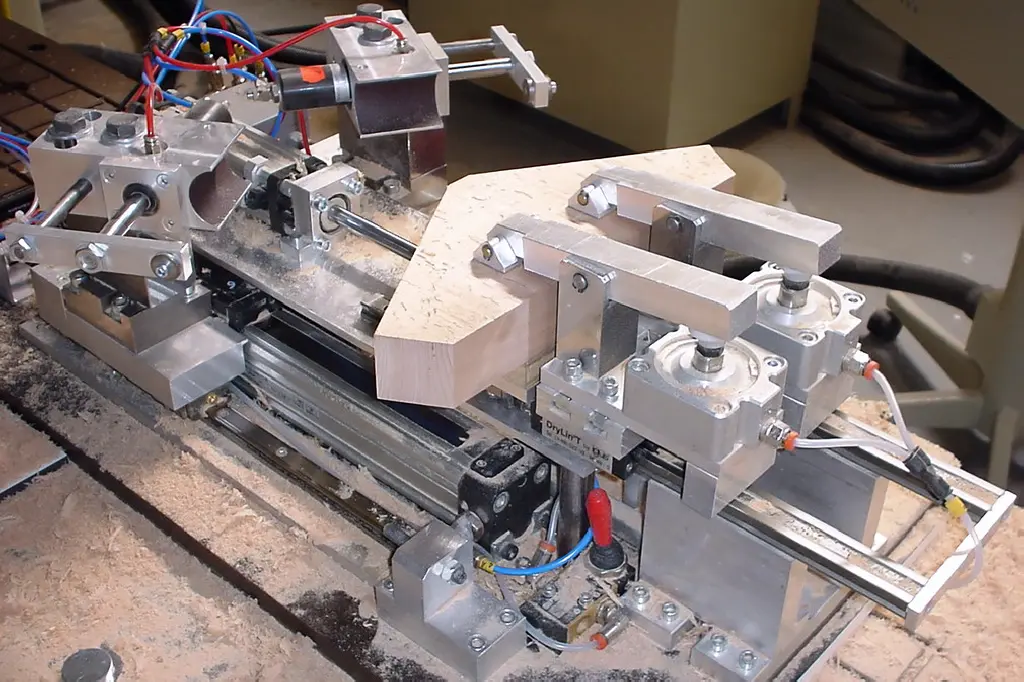
A clamping fixture is a technical mechanism that secures workpieces to machine tools, positions them, and holds them in place against the forces generated during the machining process. It establishes the connection between the workpiece and the machine and often defines the workpiece’s position within the machining area. Depending on the application, this involves either direct, position-based positioning or merely rough positioning, in which case the workpiece must be probed additionally.

Clamping fixtures consist of clamping equipment for securing the workpiece, attachments such as positioning or clamping elements, and an interface for mounting on the machine table.

Functions in Manufacturing

The primary function of a clamping fixture is to precisely position the workpiece and make it safe against all forces encountered during the manufacturing process. In doing so, it performs three basic functions simultaneously:

  • Positioning: The workpiece is oriented using defined contact points, stops, or centering elements. Depending on the application, the clamping fixture performs either coarse or fine orientation of the workpiece.
  • Fixation: Clamping elements generate the necessary holding force and prevent displacement or rotational movement caused by cutting forces or vibrations.
  • Securing and Stabilization: The clamping fixture prevents the workpiece from tilting, oscillating, or lifting off, even when load directions change.

An inadequately designed clamping fixture leads to dimensional deviations, chatter marks, or tool breakage.

Structural Design

Clamping fixtures consist of several functional elements that are designed to work together:

  • Support surfaces: They define the basic position of the workpiece and ensure a reproducible contact surface that is safe.
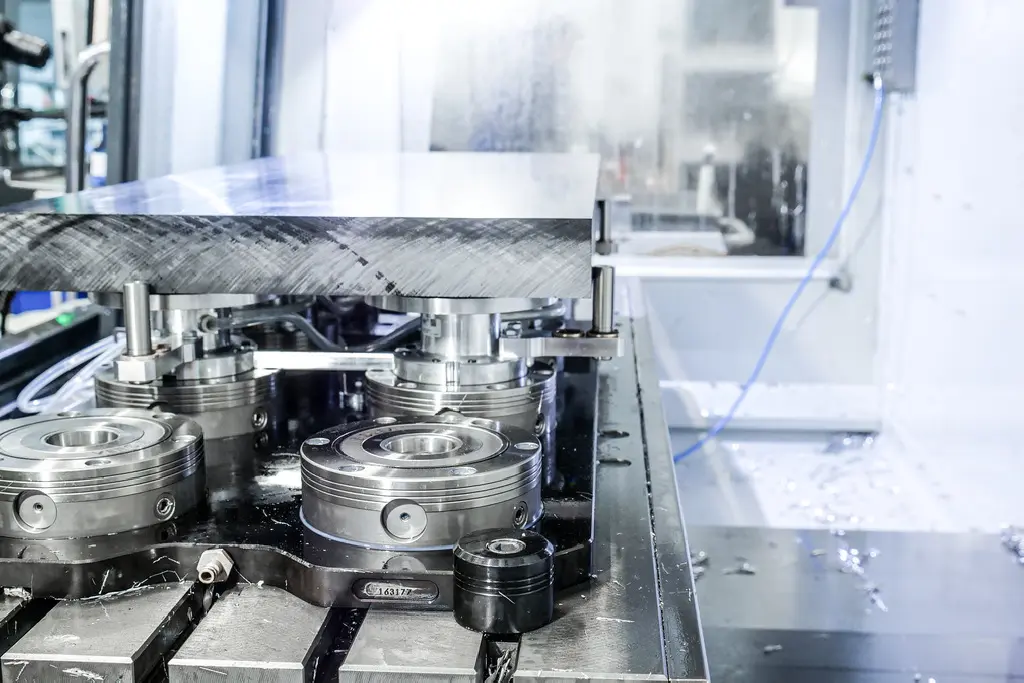
  • Positioning elements: Stops, dowels, or centering sleeves precisely align the workpiece and prevent lateral displacement under process loads. In fixture and tool design, the design often follows the 3-2-1 locking principle, in which the workpiece’s six degrees of freedom are defined by specified support and stop points. However, in standardized clamping fixtures and clamping equipment, this principle is not always fully implemented, depending on the application, in order to allow for more flexible use with different workpiece geometries.
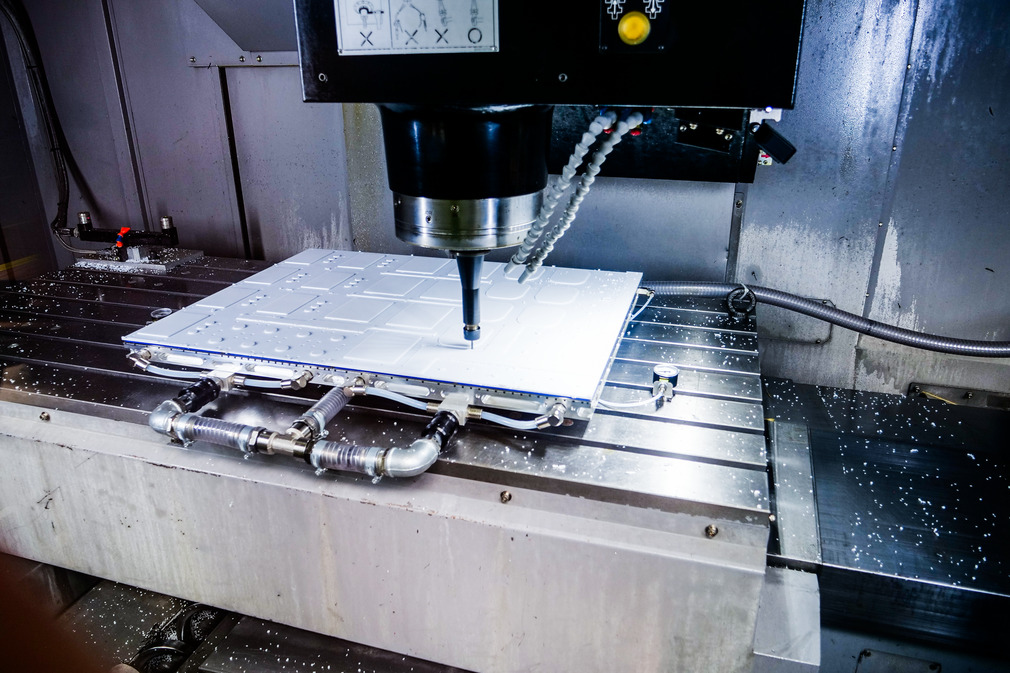
  • Clamping equipment: It generates the holding force. Depending on the requirements, mechanical, hydraulic, pneumatic, magnetic, or vacuum-based clamping equipment is used.
  • Machine interface: Clamping systems are connected to the machine table via appropriate mounting elements. Depending on the machine and clamping concept, T-slot tables, zero-point clamping systems, grid tables, or flat tables are used, for example.

Standardized vs. Dedicated Clamping Fixtures

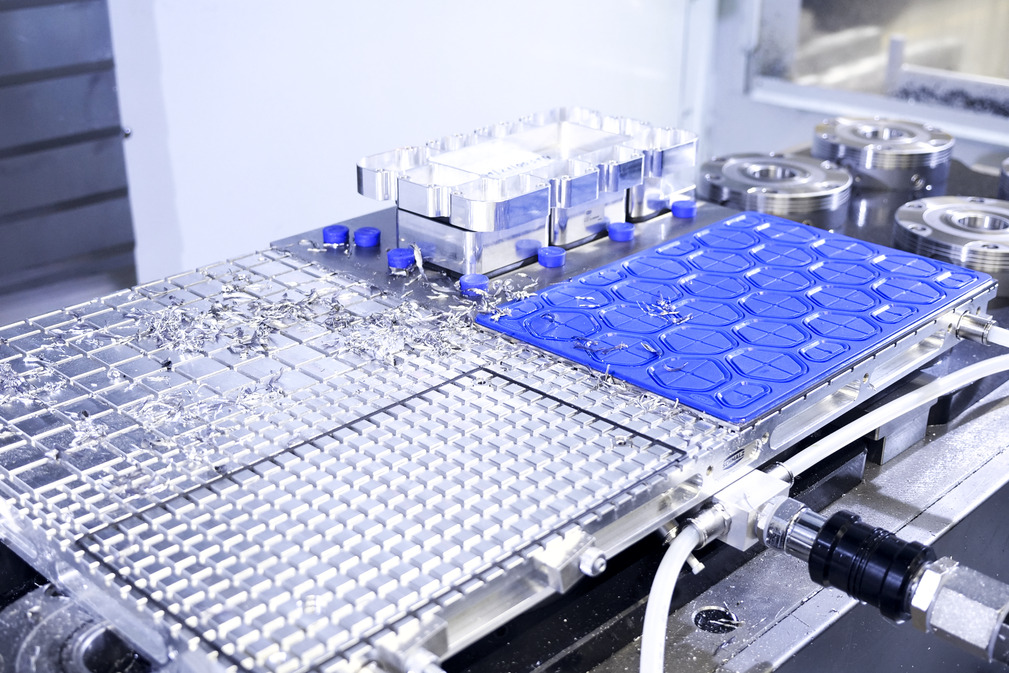
In many machining processes—particularly in small- and medium-volume production—standardized clamping equipment or universal clamping fixtures are used, which can be flexible adapted to different workpiece geometries. Typical examples include vises, power clamping blocks, and vacuum grid plates. These systems are often based on modular base and add-on components that can be adapted to changing machining tasks without requiring a complete redesign.

For complex, recurring, or highly automated manufacturing tasks in large-scale production, on the other hand, dedicated clamping fixtures are often used that are specifically tailored to workpiece geometry, process forces, and production sequences. The higher design and economic investment enables high process reliability, short set-up times, and reproducible results.

Zero-point clamping systems serve as a standardized interface between the clamping fixture and the machine table. They enable fast and reproducible setup of different clamping fixtures on the machine. Depending on the application, either only the clamping fixture or the complete unit consisting of the clamping fixture and workpiece is changed.

Quick-change systems are also based on standardized interfaces and support short set-up times as well as reproducible clamping processes in automated manufacturing environments.

Clamping fixtures in CNC machining centers and 5- and 6-axis applications

In CNC machining centers, clamping fixtures must meet high requirements for process reliability, repeatability, accessibility, and automatability.

  • Repeatability: High positioning repeatability is essential for dimensional accuracy over multiple clamping cycles—a critical factor in both single-part and series production.
  • Multi-side machining: Clamping fixtures must be designed so that all necessary tool access points remain unobstructed without requiring additional re-clamping operations. Depending on the application, individual clamping or stop elements may be designed to swing away to improve accessibility to the workpiece during the machining process.
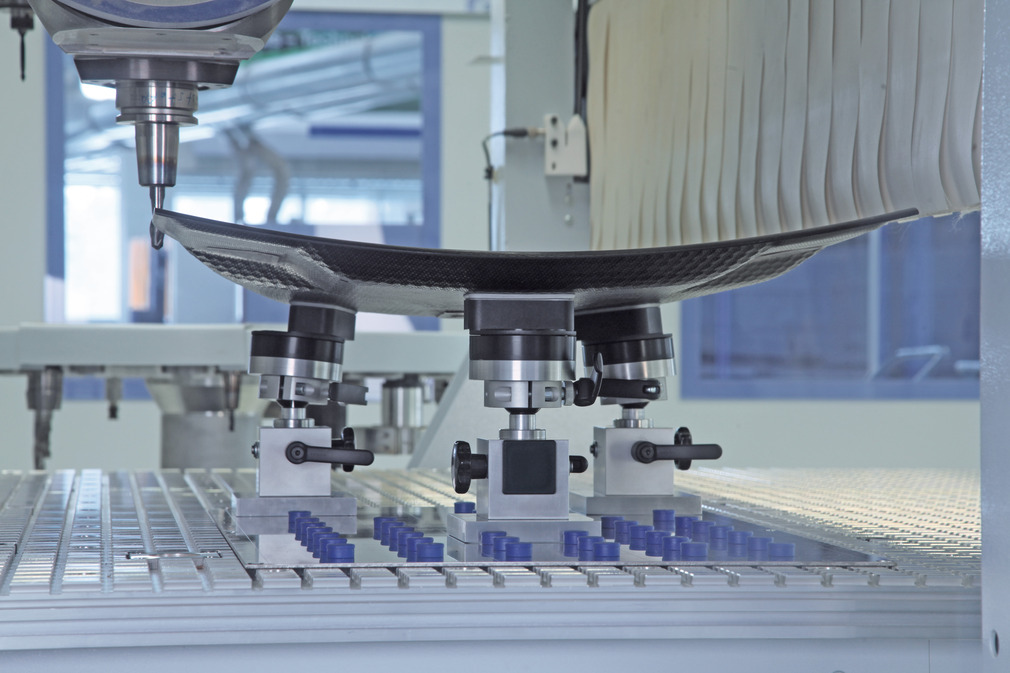
  • 5- and 6-Axis Machining: In 5- and 6-axis applications, collision-free design of the clamping fixture is particularly critical. The ranges of motion of the tool and machine head must be fully usable.
  • Automation Capability: In automated manufacturing environments, standardized machine interfaces and short set-up times play a decisive role in the overall efficiency of the system.

Design of Clamping Fixtures: Metal, Plastics, Wood, and Glass

The design of clamping fixtures is determined both by the requirements of the machining process and by the material and component geometry of the workpiece. In addition to repeatability, accessibility, and automatability, clamping fixtures must therefore be specifically adapted to the mechanical properties and load-bearing capacity of the respective material.

Metal and Aluminum

For metallic materials, clamping fixtures must absorb high process forces and ensure precise positioning. A sufficiently rigid design prevents relative movement between the workpiece and the fixture during machining. For thin-walled or large-surface-area metal workpieces, distributed force application across multiple clamping points is necessary, as concentrated loads can lead to warping or dimensional deviations.

Plastics

Plastics have lower stiffness than metals and are sensitive to localized stresses. Clamping fixtures must distribute the force more evenly and be tailored to the specific material properties. Support surfaces that prevent indentations and reduced clamping forces prevent deformation and surface damage during machining.

Wood and Wood-Based Materials

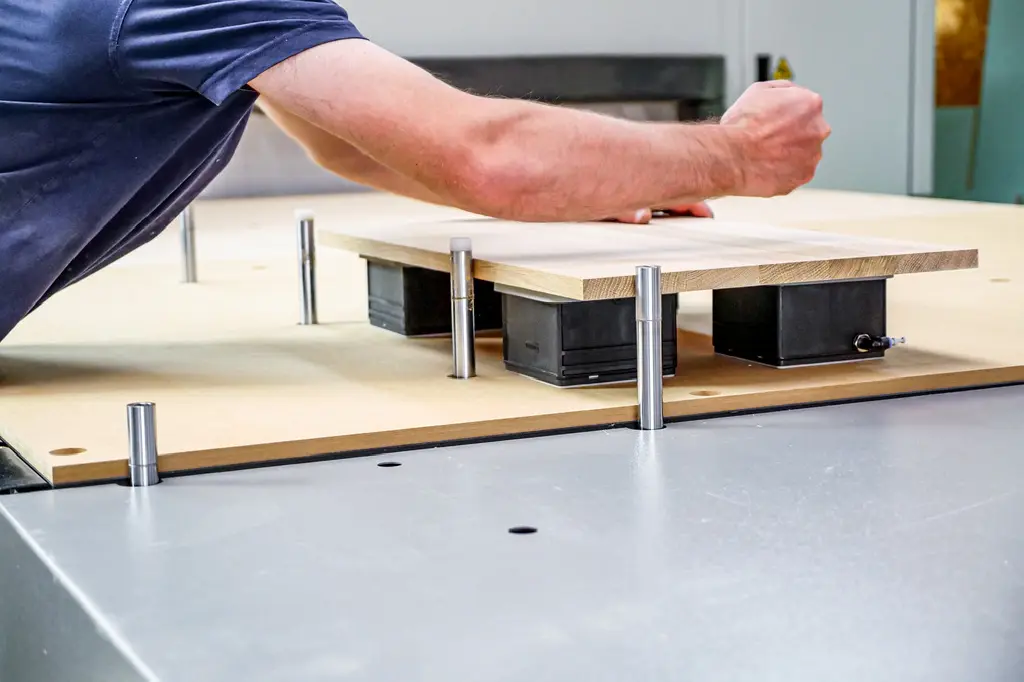
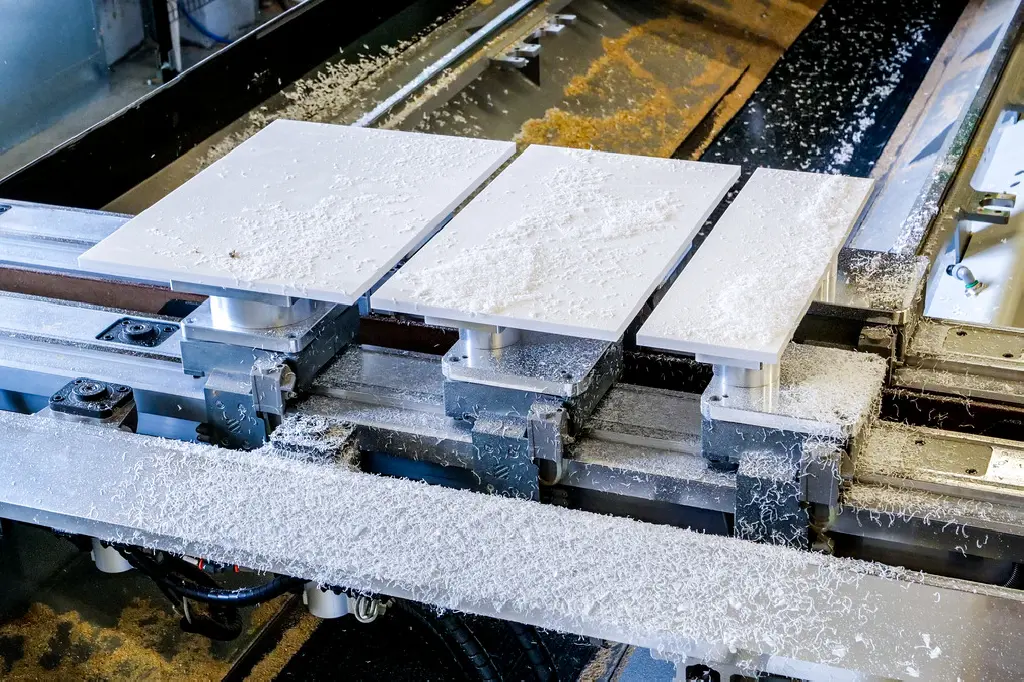
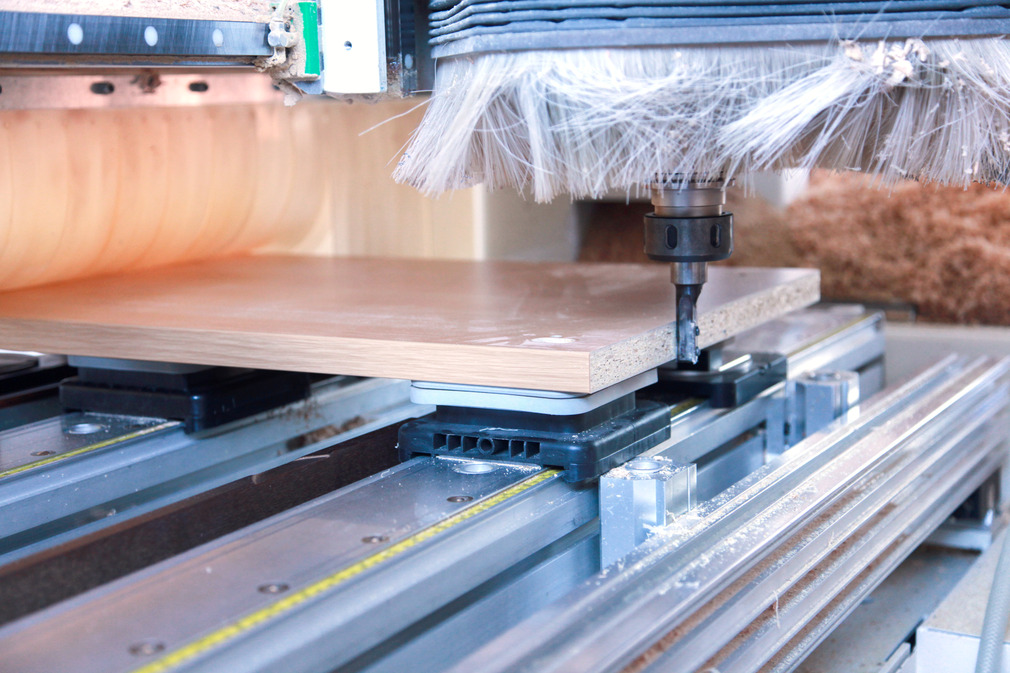
In wood working, clamping fixtures are often designed for large-surface workpieces with varying geometries. The clamping points must be flexible to allow clamping of different component shapes without the need for retooling. Since wood-based materials can be sensitive to pressure, soft supports or pressure-distributing elements between the clamping equipment and the workpiece are common.

Glass and brittle materials

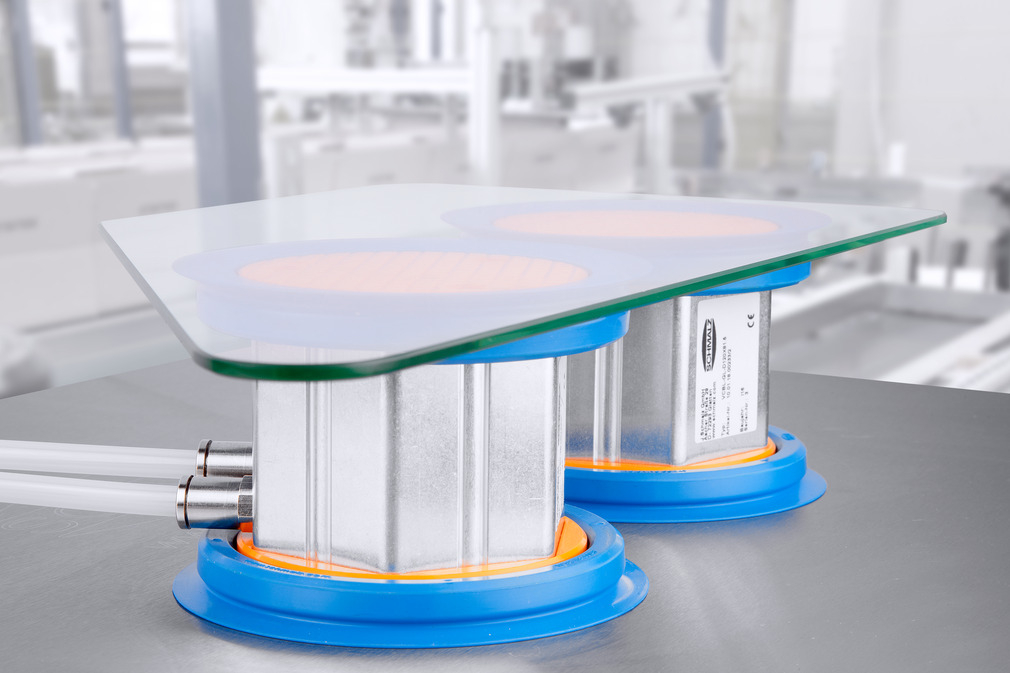
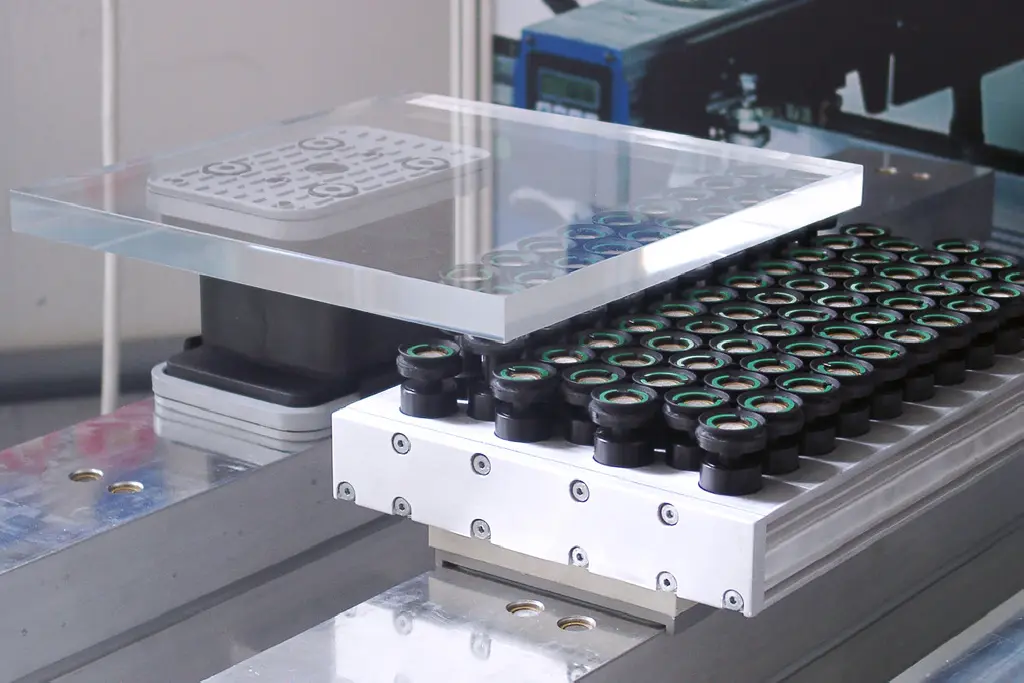
Glass and similar materials require particularly uniform force distribution across the entire contact surface. Even slight local stress peaks can lead to microcracks or breakage in brittle materials. The clamping fixture must therefore be designed to completely avoid point loads caused by jaws, clamps, or screws.

Related terms

Clamping equipment
Clamping equipment secures workpieces during machining by applying targeted force.
Vacuum Clamping Technology
Vacuum clamping technology secures workpieces across their entire surface using vacuum—gently, without warping, and without mechanical clamping points.

Schmalz Companies

Select your Schmalz Company in one of the following regions:

Regions

Your region is not listed?

Schmalz maintains an international sales network with sales partners in over 80 countries. Please select a language for our international website.

The URL you are trying to access is not in the correct language or country context.

The store channel associated with your account does not match the channel of the requested URL. To view prices or place an order, please switch to your user-specific channel.

0 products successfully added to cart

Go to shopping cart