ISO 11228
ISO 11228 is an international series of standards for the ergonomic assessment of manual handling of loads. It covers activities such as lifting, lowering, carrying, pulling, and pushing, and aims to design physical tasks in such a way as to prevent musculoskeletal disorders – particularly back pain. The standard provides an internationally recognized framework for the ergonomic design of manual load-handling activities.

The three parts of the series of standards
ISO 11228 is divided into three separate parts, each of which addresses different forms of load handling:
ISO 11228-1 – Lifting, Lowering, and Carrying
The first part covers the lifting, lowering, and carrying of objects weighing 3 kg or more. As a starting point for the assessment, the standard specifies a reference mass of 25 kg under ideal conditions. This value is not a blanket maximum permissible weight, but is adapted depending on factors such as body posture, gripping conditions, lifting height, frequency, and duration of the activity. Methodologically, ISO 11228-1 is based on the NIOSH lifting formula, an internationally recognized method for the ergonomically evaluated assessment of lifting operations.
ISO 11228-2 – Pulling and Pushing
The second part addresses whole-body forces during the horizontal movement of loads, such as when pushing transport carts or roll containers.
ISO 11228-3 – Light Loads at High Frequency
The third part addresses repetitive tasks involving small loads, such as those encountered in mounting or order-picking processes. The focus is on the assessment of stresses on the upper extremities.
In Germany and Europe, the three parts are adopted as DIN EN ISO 11228.
What the standard covers
ISO 11228 provides an ergonomically designed framework for the assessment of manual handling of loads. It helps to systematically record work-related physical strain and identify health risks at an early stage.
It does not cover the mere holding of objects without walking, handling while seated, or the handling of persons or animals. For the handling of persons, the supplementary Technical Report ISO/TR 12296 applies; static postures are addressed by ISO 11226.
Legal Framework and Standards in Occupational Safety and Health
In Germany, the Load Handling Ordinance (LasthandhabV) provides the legal framework for the manual handling of loads. The requirement to conduct a risk assessment stems from the Occupational Safety and Health Act; the Load Handling Ordinance specifies the requirements for activities involving physical strain. ISO 11228 provides an internationally recognized procedure for the ergonomical assessment of manual load handling. In the context of machinery, the standards of the EN 1005 series supplement the requirements for the ergonomical design of workplaces and work equipment.
Key Characteristic Method (KCM)
In Germany, the Key Characteristics Method (LMM), developed by the Federal Institute for Occupational Safety and Health (BAuA), is frequently used for the practical assessment of physical strain. It helps companies systematically assess activities involving lifting, carrying, pulling, and pushing, and to derive measures for the ergonomically designed layout of workstations. The method is often used as a supplement to DIN EN ISO 11228.
Ergonomically designed measures and lifting solutions
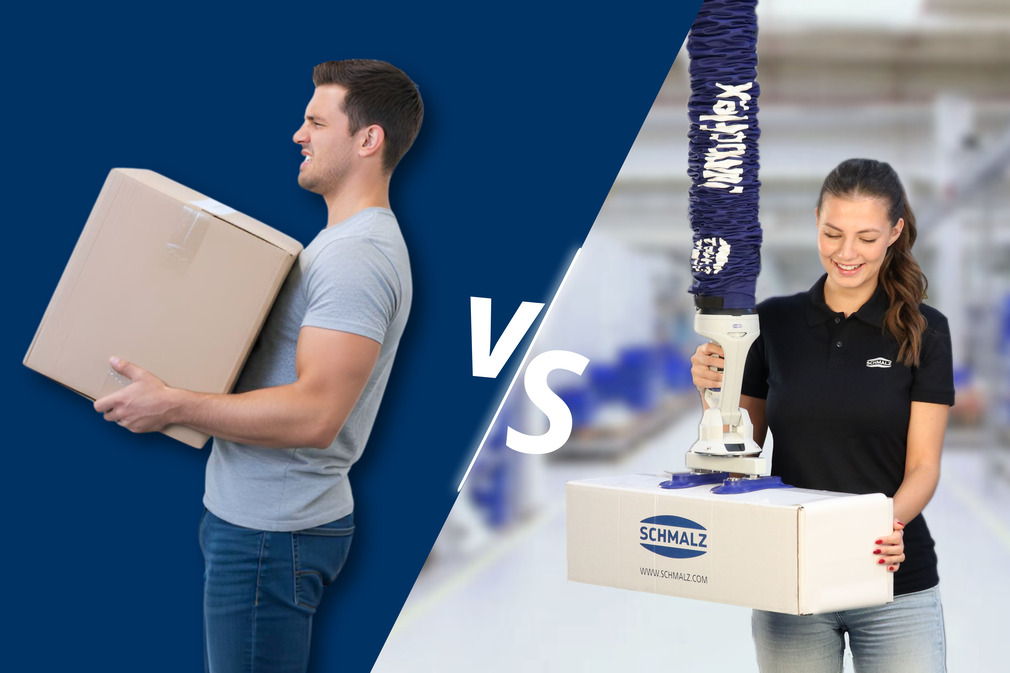
If the analysis conducted in accordance with ISO 11228 indicates an increased risk, technical, organizational, or ergonomically designed measures may be considered. These include, for example, lifting aids, vacuum lifting devices, or the adaptation of work processes to make manual load handling more ergonomically efficient and reduce health risks in the long term.
Related terms
Frequently asked questions
Is ISO 11228 a legal requirement in Germany?
ISO 11228 itself is not mandatory; the legal obligation stems from the Load Handling Ordinance and the Occupational Safety and Health Act. However, the standard is recognized as a best practice for conducting the legally required risk assessment of manual load handling in a technically sound manner.
Does ISO 11228-1 also apply to loads weighing less than 3 kg?
No. ISO 11228-1 applies to objects weighing 3 kg or more. Lighter loads that are handled very frequently are evaluated according to ISO 11228-3 (low loads with high frequency).
When should I use ISO 11228 instead of the key characteristic method?
The Key Characteristics Method is used for an initial preliminary assessment, while ISO 11228 is used for a more in-depth assessment in cases of increased risk. If the Key Characteristics Method indicates a critical exposure level or if an internationally standardized assessment is required, ISO 11228 provides the more detailed procedure.
How do lifting aids support the requirements of ISO 11228?
Lifting aids and vacuum lifting devices support the weight of the load and lower physical strain to below the critical thresholds specified in ISO 11228. This allows tasks that would otherwise exceed the recommended limits to be performed ergonomically and in accordance with standards.
Occupational safety and standards
For safe and compliant workplaces: Everything you need to know about occupational safety and standards can be found here.

Quality and Warranty
Schmalz has very high standards when it comes to the quality of its products and services. Numerous certifications in accordance with the DIN ISO standard attest to the quality of the products.
Maintenance and regular inspection
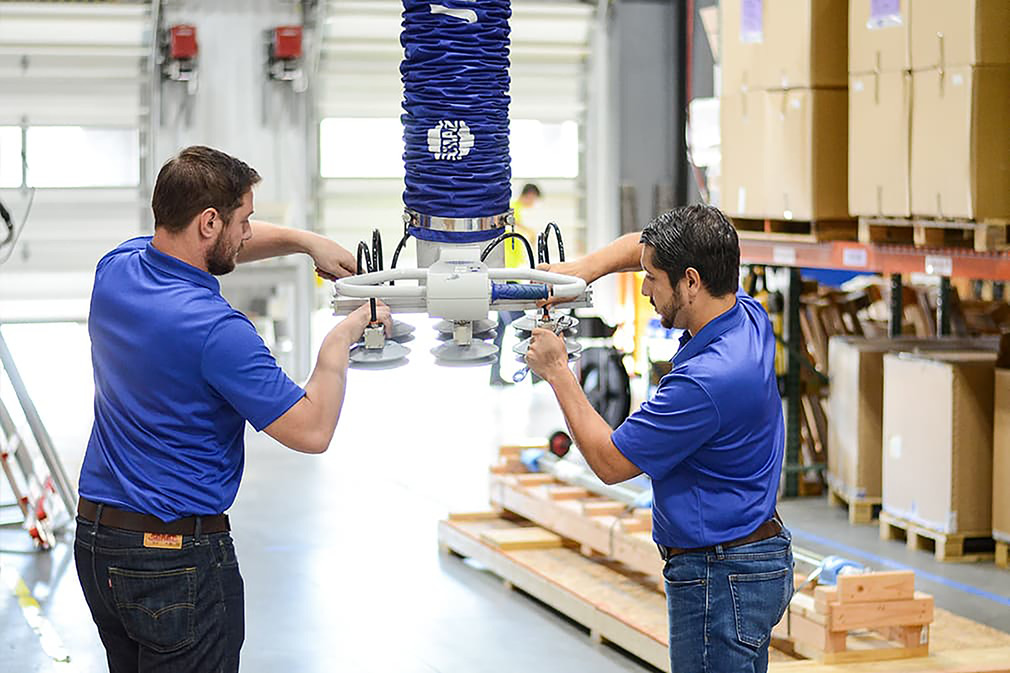
Preventive maintenance and regular inspections keep your system safe and ready.