
Occupational safety and standards
Rules that protect. Solutions that support. People who matter.

Rules that protect. Solutions that support. People who matter.
Work must not harm employees' health. On the contrary, workplaces should help preserve it. Various laws have been introduced with the aim of preventing accidents and illnesses at work and making work more humane. First and foremost is the Occupational Health and Safety Act. Additional regulations and directives specifically govern the ergonomic design of workplaces, including the use of lifting aids and technical equipment. These measures ensure that work remains not only productive, but also back-friendly and sustainable.
International standard for minimizing ergonomic risks and promoting occupational health and safety.
International standards for safe, healthy workplaces with a focus on ergonomics and accident prevention.
European directive for safe lifting and carrying to prevent musculoskeletal disorders in the workplace.
Ergonomic standards for workplace design that protect health and increase employee productivity.

Occupational health and safety laws are the foundation for protecting the health of every individual. Those who comply with them are not only investing in legal certainty, but also in a company's most important asset - its employees. Ergonomic solutions turn this foundation into lived reality.∼ Sven Kummer, Occupational Safety Specialist
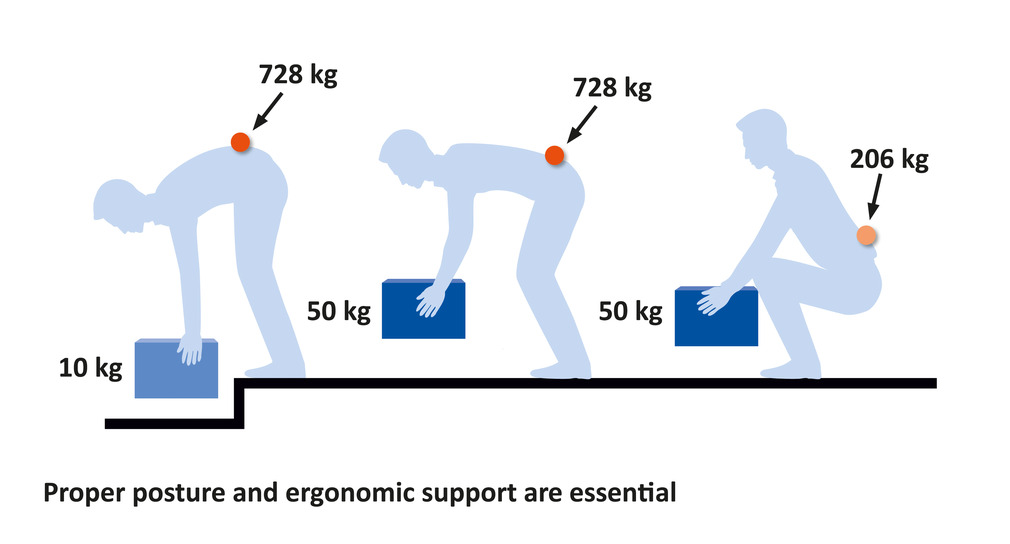
How much load an individual can carry depends on individual factors such as age, gender and physical condition. EU Directive 90/269/EEC requires employers to design workplaces in such a way that hazards caused by the manual lifting and carrying of loads are avoided. No fixed guide values are specified for the load that can be carried. As a result, guide values have been developed, for example in the so-called Hettinger table:
| Activity | Gender | Age in years | Reasonable load in kg depending on the frequency per shift | |
|---|---|---|---|---|
| occasionally < 5% | frequently > 10% | |||
| Lifting/carrying | Men | 15 - 18 | 35 kg | 20 kg |
| 19 - 45 | 55 kg | 30 kg | ||
| > 45 | 45 kg | 25 kg | ||
| Women | 15 - 18 | 15 kg | 10 kg | |
| 19 - 45 | 15 kg | 10 kg | ||
| > 45 | 15 kg | 10 kg | ||
Occupational health and safety is essential in order to avoid health complaints among employees and to maintain performance. At the same time, occupational health and safety places great emphasis on prevention: in addition to accident prevention measures, ergonomic measures are also mandatory. In contrast to accidents, which cause immediate damage to the body, one-sided strain, improperly performed movements or monotonous activities as well as overloading often lead to gradual damage to health. Ergonomics is therefore a central component of preventive occupational health and safety and should not be neglected in everyday working life.
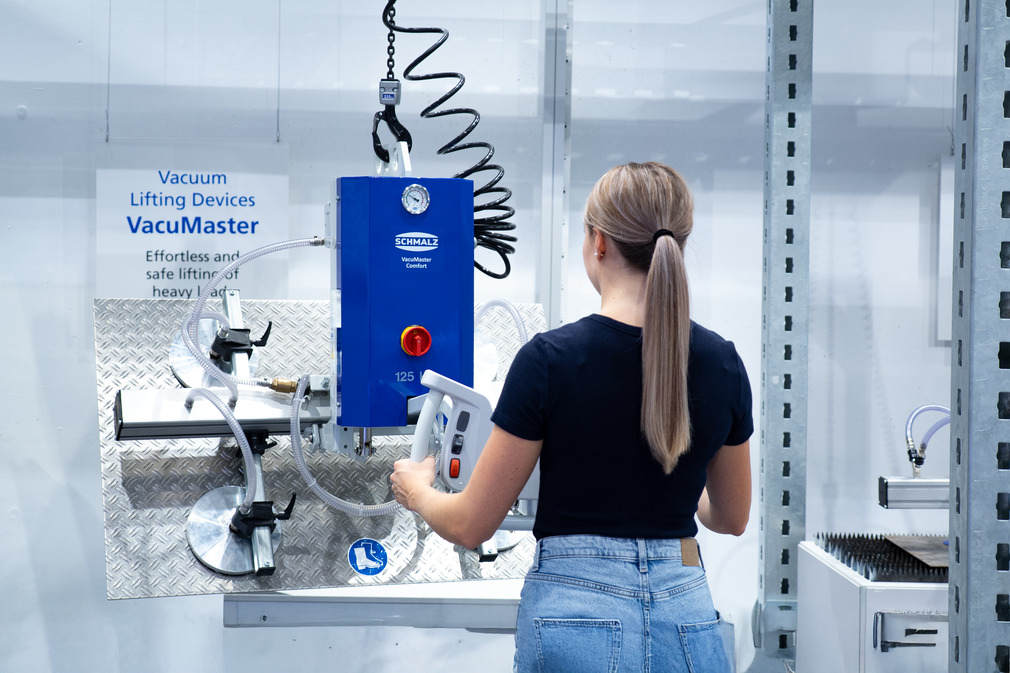
The STOP principle shows how prevention can be implemented in a structured way. The vacuum lifters from Schmalz fall under the technical measures of the STOP principle. They make lifting heavy loads easier and reduce physical strain, effectively preventing musculoskeletal injuries. As technical solutions, they sustainably improve occupational safety without having to rely on behavioural changes or organizational adaptations.

Hazardous processes should be replaced (substituted) by non-hazardous ones wherever possible. Hazards may be completely eliminated.

If substitution is not possible, technical measures should be examined and implemented as a secondary priority. The technical aid should minimize the burden on people.

With this measure, the employer is obliged to implement organizational protective measures such as barriers in hazardous areas.
If these measures are not sufficient, personal protective measures such as wearing protective clothing come into play. However, the latter are often dependent on willpower and are not as effective as technical protective measures.
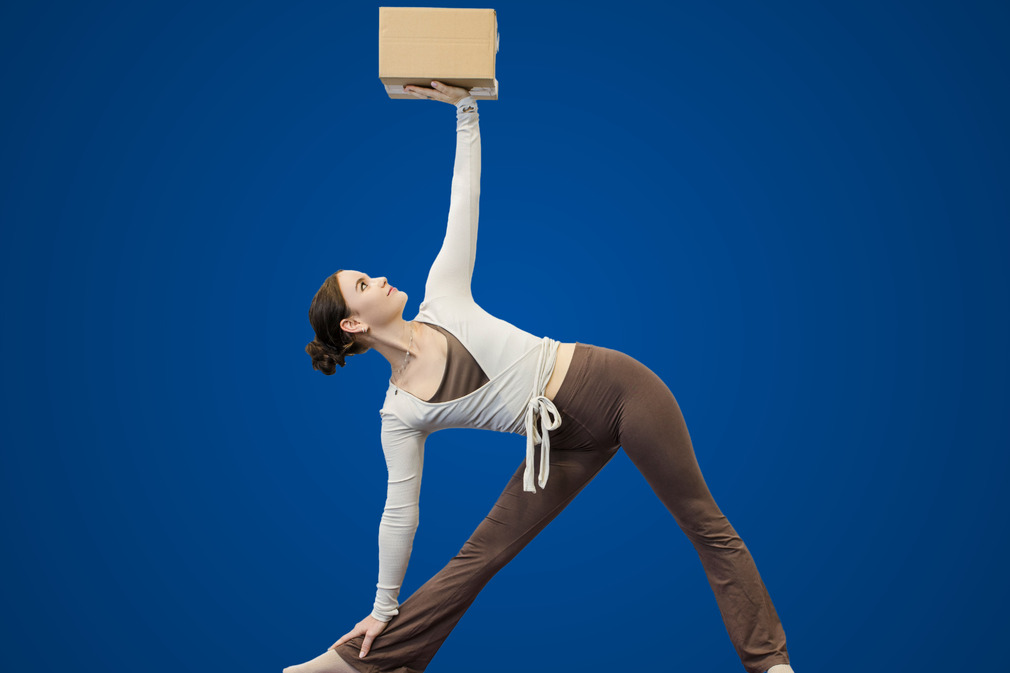
Less back pain, more power: ergonomic working protects your employees and your company.
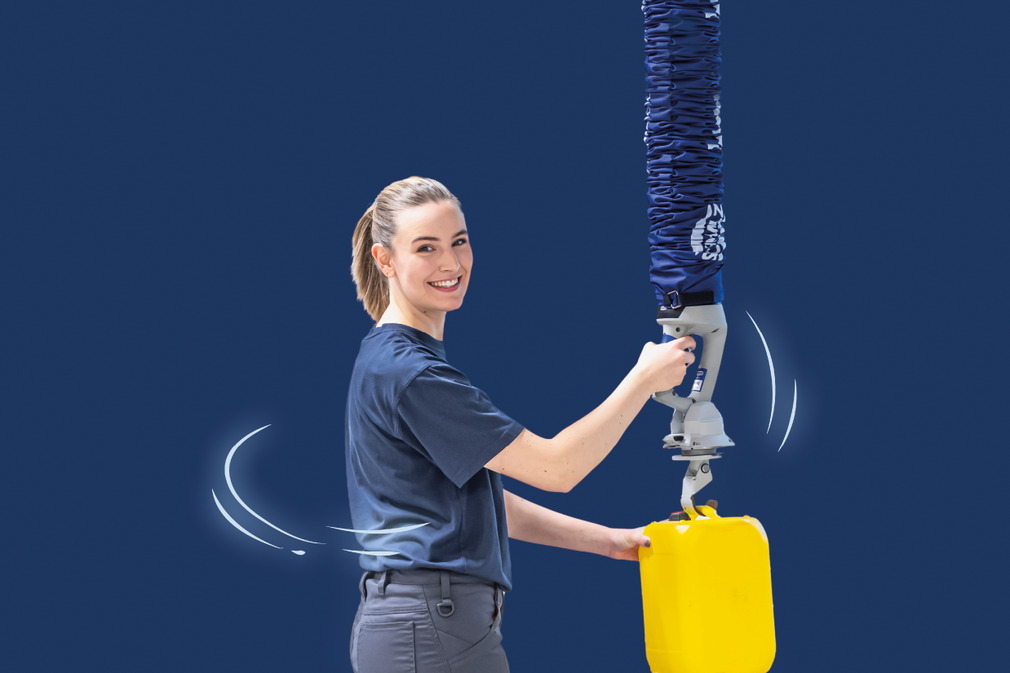
Unergonomic workstations cost time and money - find out how you can increase efficiency.

Musculoskeletal disorders are the main cause of employee absences. We show you how to minimize the risks.
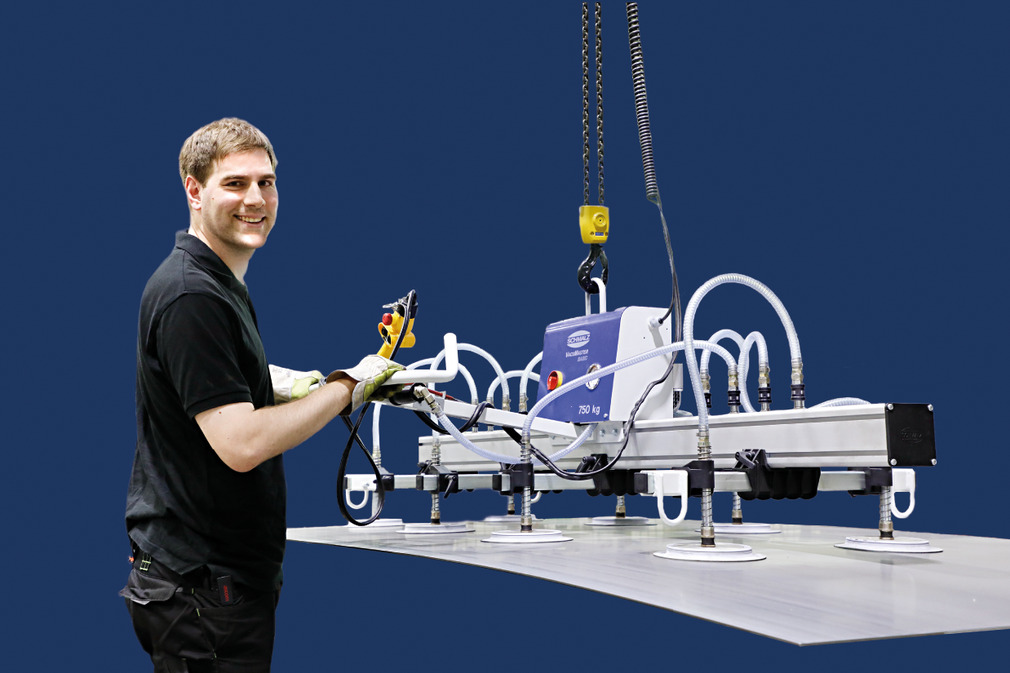
More ergonomics in everyday life: Discover our success stories on ergonomic handling.

Via Ticino 105
28066 Galliate (NO)
No, ergonomic standards are not legally binding. Standards are technical guidelines, not laws. They describe the recognized state of the art for the ergonomically designed layout of workplaces and become binding only when a national legal provision, a regulatory authority, or a contract expressly incorporates them.
Ergonomics standards are therefore not mandatory, but they are practically authoritative: They translate abstract legal protection goals into verifiable design criteria.
Conducting a risk assessment for ergonomically hazardous conditions is an employer’s obligation—enshrined in Europe in the EU Framework Directive 89/391/EEC and reflected internationally in ISO 45001. The process consists of five steps:
The risk assessment is not a one-time process: It must be updated when new work equipment is introduced, procedures change, or noticeable symptoms arise.
No, ergonomic standards are not legally binding. Standards are technical guidelines, not laws. They describe the recognized state of the art for the ergonomically designed layout of workplaces and become binding only when a national legal provision, a regulatory authority, or a contract expressly incorporates them.
Ergonomics standards are therefore not mandatory, but they are practically authoritative: They translate abstract legal protection goals into verifiable design criteria.
Conducting a risk assessment for ergonomically hazardous conditions is an employer’s obligation—enshrined in Europe in the EU Framework Directive 89/391/EEC and reflected internationally in ISO 45001. The process consists of five steps:
The risk assessment is not a one-time process: It must be updated when new work equipment is introduced, procedures change, or noticeable symptoms arise.