Clean room
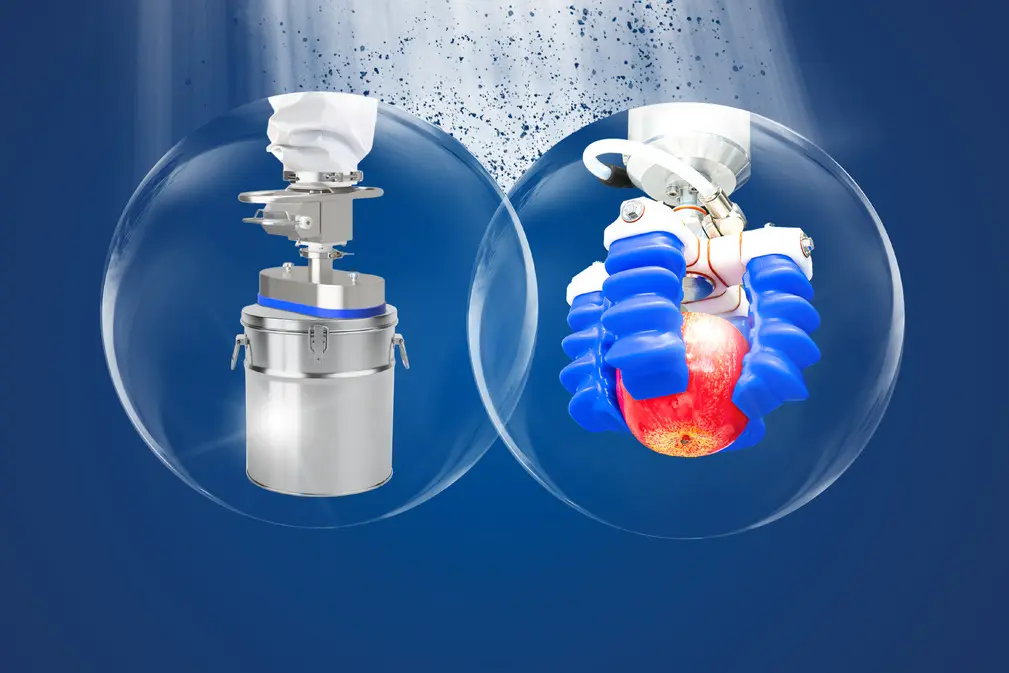
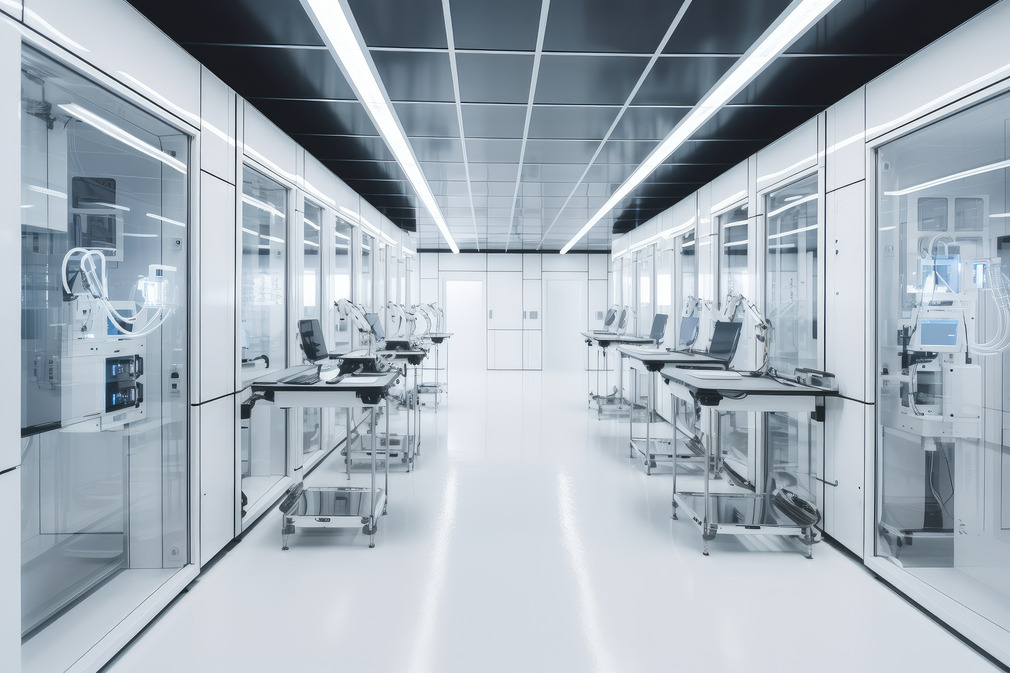
A cleanroom is a controlled environment in which exposure to particles and microorganisms is systematically reduced to a minimum. Products that have to meet the highest requirements in terms of product protection, hygiene and food safety are manufactured or tested under cleanroom conditions.
Classifications and standards
The classifications and standards in cleanrooms define the requirements for cleanroom conditions, air purity and safety.They are binding for the planning, operation and validation of cleanrooms and ensure uniform quality in different industries.
ISO 14644
Cleanrooms are classified according to the international standard ISO 14644. The ISO classes specify the maximum number of particles that may be present per cubic meter of air. The lower the class - for example ISO 5 - the stricter the requirements for air cleanliness. This classification is the basis for assessing cleanroom suitability and is checked by regular particle measurements.
GMP cleanroom classes (A-D)
Good Manufacturing Practice (GMP) describes binding guidelines for the manufacture of pharmaceuticals and food products. Cleanrooms are divided into GMP classes A to D. Each class defines which cleanliness standards apply to different production steps - from the ultra-clean environment for sterile filling (class A) to less stringent areas (class D). This ensures that the entire production process meets the required hygiene standards.
ATEX
ATEX stands for ATmosphères EXplosibles and comprises European directives for the safe operation of devices and protective systems in potentially explosive atmospheres. In cleanrooms, ATEX is relevant when working with flammable substances or solvents. All devices and systems used must be certified accordingly in order to avoid explosion risks and ensure safety.
Risks and challenges of cleanroom technology
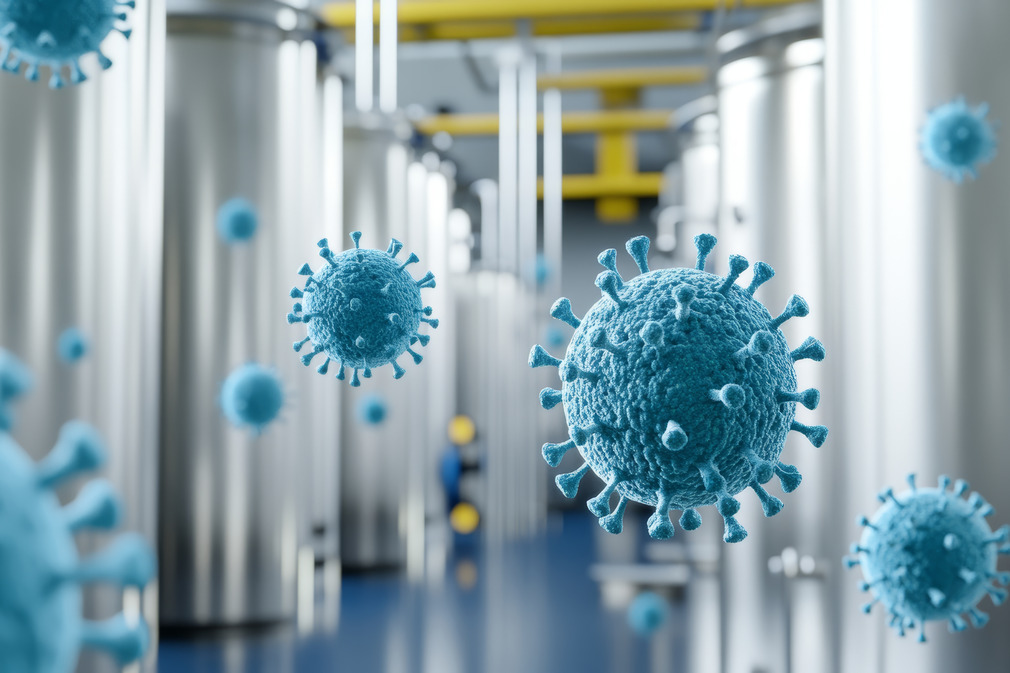
Although cleanrooms are circuitried with state-of-the-art technology, certain risks remain that can only be reliably controlled through consistent processes, strict operational hygiene and continuous monitoring.
Contamination
Contamination is the contamination of products, processes or materials by particles, microorganisms or chemical substances. It poses a considerable risk to quality and safety and can jeopardize the entire production process. Regular particle measurements, microbiological tests and controlled air flow are therefore essential.
Cross-contamination
Cross-contamination is the unintentional transfer of particles or impurities from one product, process or area to another. Cross-contamination poses a significant risk, particularly in the manufacture of pharmaceuticals, as the quality and safety of the end products can be directly affected. To prevent this, clearly structured hygiene concepts are required: these include thorough cleaning procedures, strict spatial separation of production steps and the use of suitable and tested work equipment. Schmalz solutions are specially designed to meet these requirements and prevent cross-contamination in advance.

Operation mode of a cleanroom
To effectively counter these risks, cleanroom technology relies on an interplay of particle control, optimized air flow and efficient filter technology. This keeps the air quality permanently stable, prevents contamination and maintains the required cleanroom conditions.
Particle control
In a cleanroom, the concentration of solid and liquid suspended matter (particles) is subject to strict control. Both their number and their size are decisive for cleanroom suitability. Regular particle measurements ensure that there are no contaminants that could impair processes or products.
Air purity
Air purity describes the quality of the air space in the cleanroom and refers in particular to the concentration of particles and microorganisms. It is safe thanks to controlled air flows and the use of special filter systems. Uniform airflow ensures that particles are reliably removed and no cross-contamination occurs.
HEPA filter
HEPA filters (High Efficiency Particulate Air Filters) are a central element of cleanroom technology. They remove at least 99.97 % of all particles down to a size of 0.3 µm and thus reliably ensure air purity.
Cleaning and processes
In addition to the technical operation mode, consistent cleaning is essential to ensure the required cleanroom conditions in the long term. Automated processes such as CIP and SIP cleaning, suitable cleanroom clothing and the hygienic design of equipment and materials all contribute to this.
CIP cleaning (Cleaning in Place)
CIP cleaning is an automated process in which systems and pipelines are cleaned and disinfected without being dismantled. This process saves time, reduces the risk of contamination and is particularly important in the food and pharmaceutical industries, where the highest standards of hygiene and food safety are required.
SIP cleaning (Sterilization in Place)
SIP cleaning supplements the CIP process with targeted sterilization of production facilities. This involves sterilizing lines and systems with steam or chemical agents to reliably remove microorganisms. SIP is indispensable for the manufacture of medical devices and pharmaceutical products that require absolute sterility.
Hygienic design
Hygienic design refers to the structural design of systems, materials and production environments with the aim of ensuring maximum cleanliness and easy cleanability. All components are achieved in such a way that no particles, liquids or microorganisms can accumulate. This includes smooth, non-porous surfaces, rounded transitions and no gaps or cavities that are difficult to access. This principle facilitates cleaning and disinfection, reduces the risk of contamination and ensures compliance with strict cleanroom standards such as ISO classes and GMP guidelines.
Cleanroom garments
The right cleanroom clothing is also a key component of cleanroom technology. It prevents the release of particles and microorganisms by people and includes protective suits, hoods, gloves and special shoes. Defined cleanroom gowning procedures specify how to put on the clothing correctly to ensure cleanroom suitability and the safety of production.