Ergonomics: The Underestimated Driver of Performance
Repetitive lifting tasks turn light cardboard boxes into heavy labor. Vacuum tube lifters reduce the strain on employees and increase throughput.
In storage facilities and shipping facilities, an unassuming number often determines profit or loss: the repetition rate. A cardboard box with a weight of 10 kilograms seems harmless. But when moved a thousand times per shift, the cumulative effect of this routine turns it into back-breaking work. More than a third of all European workers regularly lift loads for at least a quarter of their working hours, according to the European Agency for Safety and Health at Work (EU-OSHA). In a typical storage facility, teams move around six metric tons per shift. Few industries are evolving as dynamically as intra-logistic, driven by the sustained growth of e-commerce. As the flow of goods increases, so do the cycle frequency, pressure, and strain in the warehouses.
“Ergonomics is not an afterthought, but an integral part of efficient processes. Reducing the physical strain on people improves the system’s performance.”∼ Eric Wilhelm, Head of the Handling Business Unit, Member of the Executive Board
At the same time, absenteeism is on the rise. According to the Umbrella Association of Company Health Insurance Funds (BKK), employees in Germany were on sick leave for an average of 22.3 days last year. Musculoskeletal disorders (MSDs) accounted for about one-fifth of absences, with back problems topping the list. They occur frequently and result in an average of 18.6 days of absence per person. The Federal Institute for Occupational Safety and Health estimates that the costs of lost production due to sick days will reach 26.1 billion euros in 2024.
These figures do not describe a minor issue; rather, they strike at the heart of manual processes. Loads weighing between five and ten kilograms are particularly problematic, as they are considered light. But anyone who lifts them hundreds of times per shift quickly reaches their limit.
When Fatigue Drives Processes
Repetitive lifting and positioning tasks are tiring. This leads to a decline in concentration, and errors creep in: incorrectly picked items, damaged packaging, or inaccurately placed components cost time and money. Added to this are indirect effects. When employees are absent, others have to step in. Shift schedules come under pressure, overtime piles up, and morale takes a hit. Losing qualified employees means losing expertise. The shortage of skilled workers exacerbates the problem.
Automation seems like an obvious solution, but not every process is suitable for it. “A wide variety of product variants, fluctuating production volumes, and limited investment budgets set certain limits. Flexible solutions are especially needed in shipping and order picking,” says Eric Wilhelm, Head of the Handling Business Unit and a member of the Executive Board at Schmalz in Glatten.
High throughput, little leeway
One example is dm’s logistics operations. The German drugstore chain operates more than 4,100 stores and employs approximately 90,000 employees in Europe. It sells a wide range of cosmetics, health and household products, as well as organic food products, and has a customer orientation that serves both in-store and online customers across national borders. The rapidly growing number of daily shipments was increasingly pushing the textile distribution center in Karlsruhe to its limits—a solution was needed that would make processes more efficient, lower transportation costs, and significantly ease the workload on employees. The shipping processes ran at a fast pace. Many manual tasks were repeated thousands of times. Full automation was out of the question due to high investment costs and limited flexibility. The goal was to find a solution that would support existing processes without turning them upside down. It needed to reduce the workload, stabilize throughput, and integrate quickly.
Ergonomics as an Economic Lever
This is where vacuum expert Schmalz stepped in to reduce physical strain and make processes faster and more stable. Ergonomic handling systems can be integrated into existing workstations without lengthy project timelines. Employees no longer grasp the load directly but instead move it with the assistance of a vacuum lifting device. The motion remains familiar, while the physical strain is significantly reduced. The economic benefits are immediate.
Schmalz developed a custom made solution for dm consisting of a vacuum tube lifter and an adapted crane system. This allows cardboard boxes to be stacked on pallets up to 2.15 meters high while maintaining an upright posture—without strenuous effort or unhealthy movements. An adjustable vacuum gripper enables flexible handling of different carton sizes, so the process runs without time-consuming changeover times. This saves time per cycle and noticeably increases efficiency in the shipping department.
A simple calculation illustrates the impact: If a team member saves one second per stroke and repeats the process a thousand times, they gain 16.7 minutes per shift. If a system reduces the effective load by one kilogram over a thousand repetitions, that amounts to a daily reduction of one metric ton.
Measurable Results: Improved Power, Fewer Outages
Studies by the Fraunhofer Institute for Manufacturing Engineering and Automation (IPA) show that ergonomically designed workstations can increase productivity by up to 25 percent. Work-related musculoskeletal disorders decrease by up to 59 percent, and days lost to illness by up to 75 percent. Error rates also drop significantly.
These effects are interrelated. Less fatigue leads to more consistent movement patterns and, consequently, fewer errors. The reduced error rate cuts down on rework and returns. In addition, output per shift increases without the need for additional employees.
Holistic handling rather than isolated measures
This is precisely where well-thought-out technical solutions come into play—solutions that do not view workstations in isolation but consistently integrate them into the entire handling process. Schmalz views ergonomics as a systemic challenge. The product portfolio ranges from vacuum tube lifters for dynamic operations with high cycle frequencies to chain-hoist-based vacuum lifting devices for heavier loads, and includes sensitive smart hoists for precise positioning. The range is supplemented by responsive, hand-guided cranes, exoskeletons, and mobile conveyor systems.
Vacuum tube lifters enable the quick lifting, rotating, and setting down of cardboard boxes, bags, or other packages. They respond directly to hand movements, and the load follows intuitively. This shortens training times and reduces operating errors. Chain hoist-based vacuum lifting devices are used where heavier weights need to be moved. Smart hoists assist with mounting and positioning tasks that require precision. Crane systems provide the necessary range of motion and guide the lifting devices responsively through the space. This creates workstations that are optimally suited to the task at hand. “The interaction between the components is crucial,” emphasizes Eric Wilhelm, “which is why Schmalz doesn’t just supply a single device, but a coordinated complete system.” Consultation, design, and integration are handled by a single source in close coordination with the customer. This reduces interfaces and increases operational safety.
Flexibility in the Face of Demographic Change
Another advantage of these solutions is evident in human resources management. Ergonomically designed handling systems make it possible to assign tasks regardless of physical strength. Whether young or with experience, male or female: With the right lifting aid, loads can be moved smoothly and in a controlled manner. This broadens the pool of applicants. At the same time, it reduces the hesitation older employees may feel about staying with the operation longer. In times of a shortage of skilled workers, this flexibility takes on strategic importance.
Ergonomic systems also help with short-term fluctuations in order volume. What used to require two people can now be done by one person alone. That person handles the load safely, precisely, and effortlessly. This frees up employees for other tasks and gives the team more flexibility in their day-to-day operations.
Improved Quality and Reliable Shipping
Ergonomics doesn’t just affect your back—it also influences process quality. When you handle a load with control, you’re less likely to damage it. When you’re not under time pressure or suffering from fatigue, you pick orders more accurately. Errors have a particularly significant impact in shipping. An incorrectly packed shipment leads to returns, rework, and damage to the company’s reputation. Every picking error that is avoided saves effort throughout the entire chain.
At dm, it became apparent that ergonomically supported employees stabilized the shipping process. Employees worked at a more consistent pace, and throughput increased. At the same time, physical complaints decreased. The average number of packages handled per day rose from around 800 to 1,850.
Investment with a short payback period
Ergonomics is one of the measures that yield quick results. It does not require complex IT integration and does not fundamentally alter material flows. It addresses issues directly at the workplace. “Companies that achieve a moderate 10 percent increase in productivity see noticeable effects over the course of the year,” says Eric Wilhelm. Combined with reduced downtime and lower error costs, this results in a rapid return on investment (ROI).
Schmalz supports this process with technical consultation and well-founded design. Systems are tailored to the workpiece, weight, cycle frequency, and spatial constraints. The goal is not maximum load capacity, but rather the optimal balance between speed, precision, and reduced physical strain. Eric Wilhelm: “Ergonomics is not an add-on, but an integral part of efficient processes. Reducing physical strain on people increases the system’s power.”
Looking Ahead
Intra-logistics must become even faster, more flexible, and more robust to meet rising requirements. At the same time, the shortage of skilled workers and cost pressures are intensifying. Automation alone will not solve all challenges. Manual processes remain indispensable in many areas. It is precisely in these areas that workplace design determines competitiveness. Ergonomically designed handling technology establishes a connection between economic interests and a sense of responsibility toward employees. It lowers costs, ensures consistent quality, and increases output. Investing in occupational health and safety today ensures stable processes. Ergonomics pays off—not someday, but right away.
The JumboFlex High-Stack vacuum tube lifter allows loads to be moved smoothly and in a controlled manner—just as they do at the drugstore chain dm.
Eric Wilhelm, Head of the Handling Business Unit and a member of Schmalz’s Executive Board: “Ergonomics isn’t an afterthought—it’s an integral part of efficient processes. Reducing the physical strain on people increases the system’s performance.”
Media contact
The Schmalz press team will be happy to answer any questions you may have.
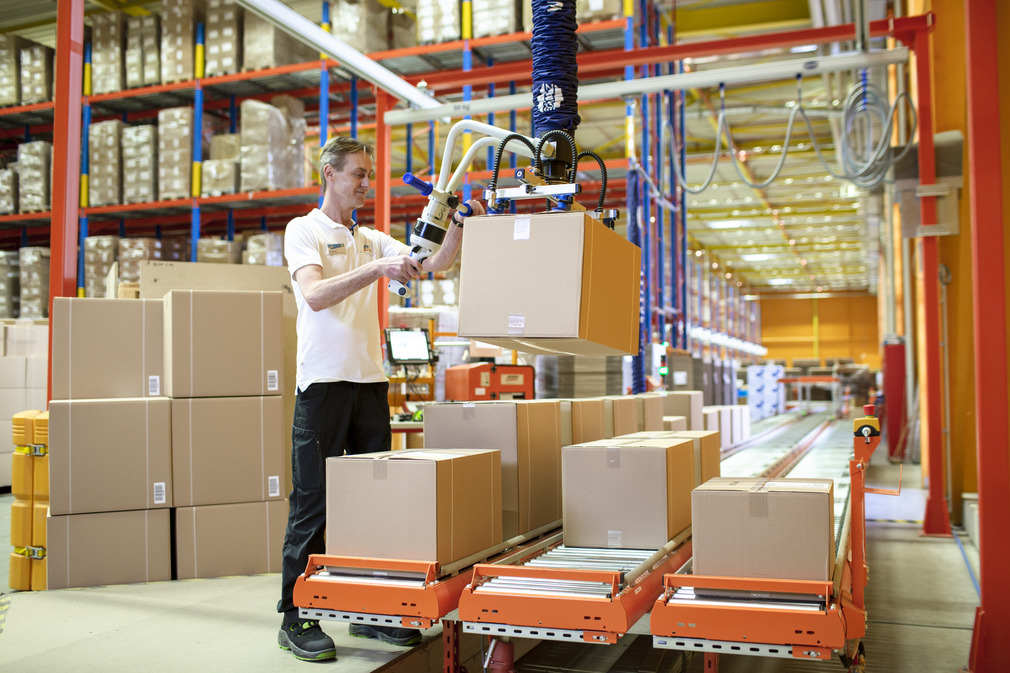
Vacuum Tube Lifters JumboFlex High-Stack
- JumboFlex High-Stack for back-friendly lifting and lowering of loads
- For optimal use of space in storage areas and transport equipment
- Up to a stacking height of 255 cm
- For workpieces up to 50 kg
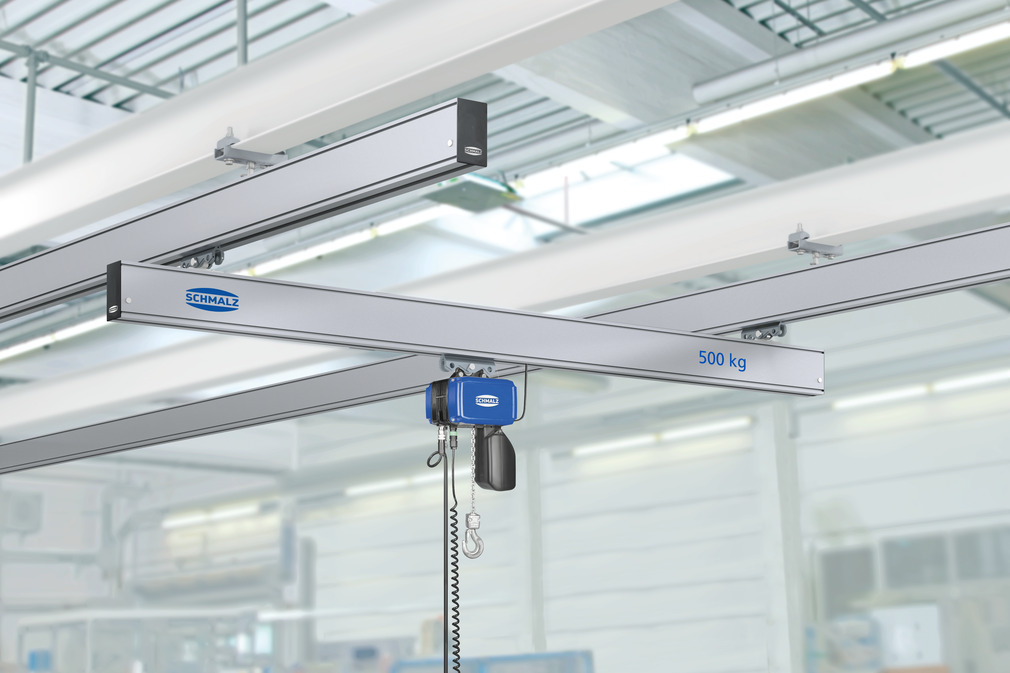
Cranes and Chain Hoists
- Aluminum crane systems and jib cranes for indoors
- Optimally adjustable to the nominal lift capacity of the vacuum lifters
- Outstanding low-friction operation and low moving mass
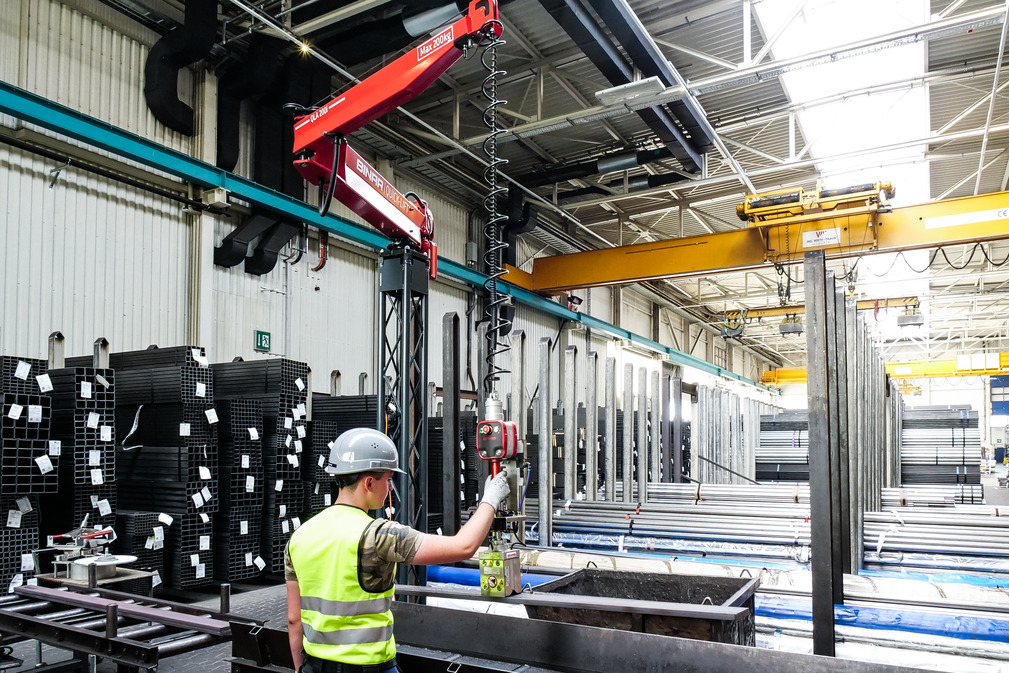
Smart Hoists
- Smart hoists are ideal as support for sensitive and precise lifting operations. The sensory detection of the hand force on the control handle enables intuitive control both on the control handle and directly on the workpiece.
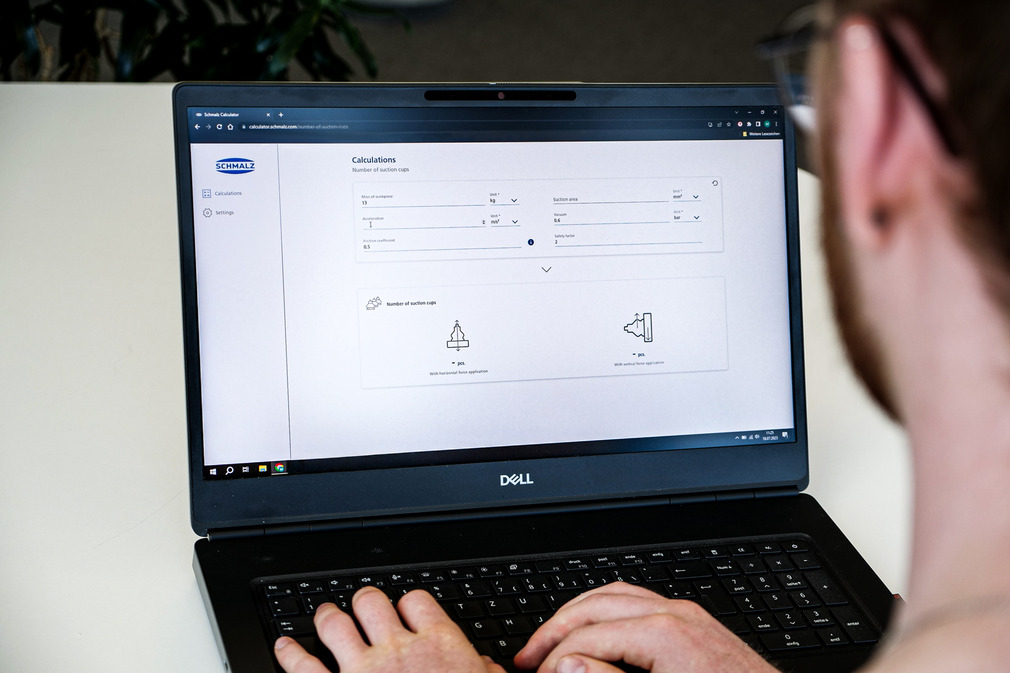
Use our Schmalz Calculator as a handy tool to help you design your vacuum system.