
Ergonomics: The Foundation for Maximum Productivity
Proper workplace design boosts performance, reduces errors and cuts costs - measurably and sustainably.

Proper workplace design boosts performance, reduces errors and cuts costs - measurably and sustainably.
Unergonomic working conditions not only cause physical discomfort, but also directly affect the productivity of employees. What initially appears to be individual fluctuations in performance often has structural causes: The workplace is not optimally adapted to the employee and the respective activity. A lack of flexibility in the working environment makes it difficult to work optimally. One-sided activities increase the strain on certain muscle groups. This leads to slower processes, more errors and frequent interruptions - with a noticeable loss of productivity and increased costs as a result.
higher productivity on average.
fewer errors on average.
reduced average employee absence days.
lower average personnel costs.
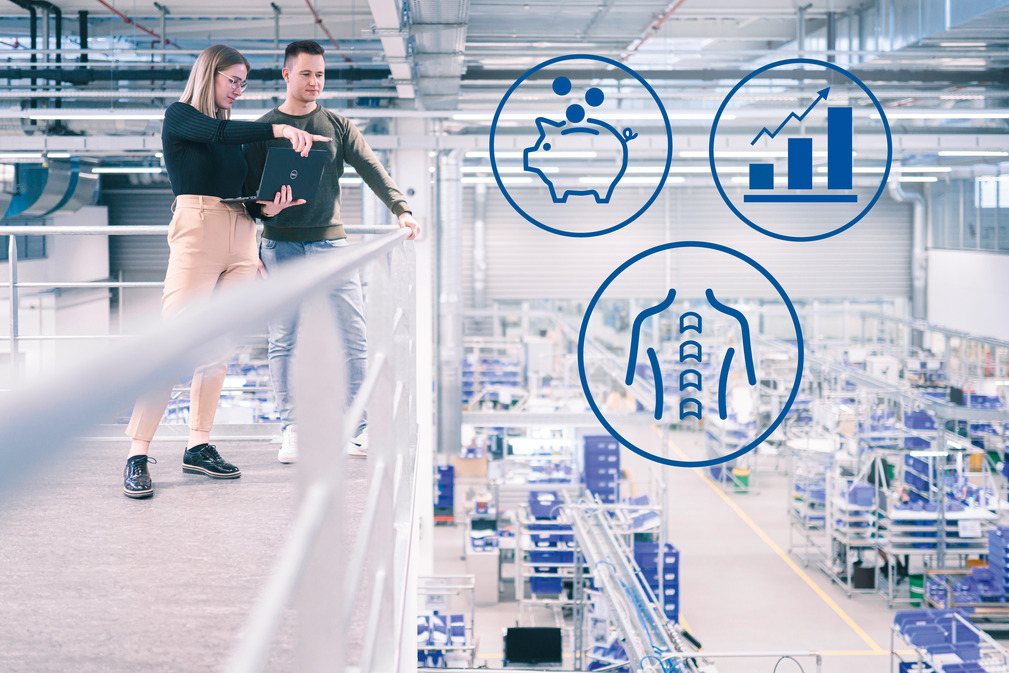
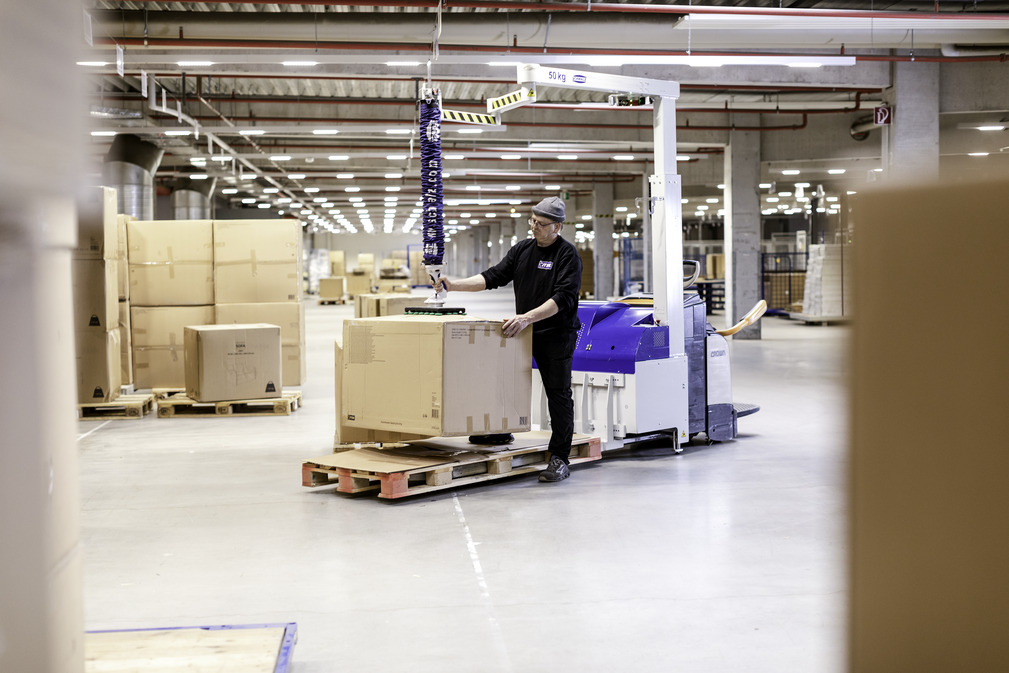
Initially, around 800 parcels left our storage facility every day, but now the average is 1,850 shipments.∼ Alexander Fiedler, Head of the Textile Logistics Department, dm Karlsruhe
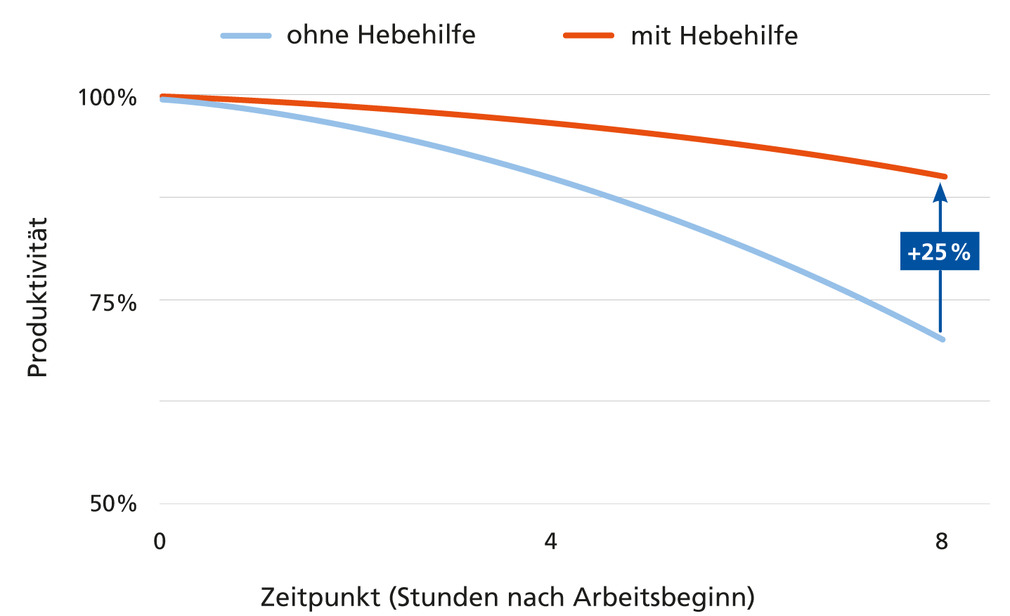
Productivity decreases continuously over the course of an 8-hour working day. Fatigue, lack of concentration and similar factors lead to a drop in performance over time, which has a negative impact on efficiency. At the same time, the risk of health problems increases, leading to downtime and further costs - a burden that every company feels every day.
An ergonomically designed workplace can prevent this loss of productivity. For example, productivity at the end of the working day can be more than a quarter higher with ergonomic support than without it.
Repeated bending or reaching for hard-to-reach workpieces slows down the flow of work, costs time and lowers quality. In the long term, this represents a competitive disadvantage.
Musculoskeletal disorders (MSDs) cause an estimated €37.7 billion in lost economic output annually in Germany. Around 18.2% of all days of absence are attributed to these conditions. Poor ergonomics have a negative impact on productivity and staff.
Employees who work permanently in awkward postures or use unsuitable work equipment quickly suffer from a drop in performance and a lack of concentration. The result: declining motivation and increased employee turnover.
Pain caused by lifting heavy loads or physical strain is a distraction and increases the susceptibility to errors. This not only impairs productivity, but can also lead to serious accidents.
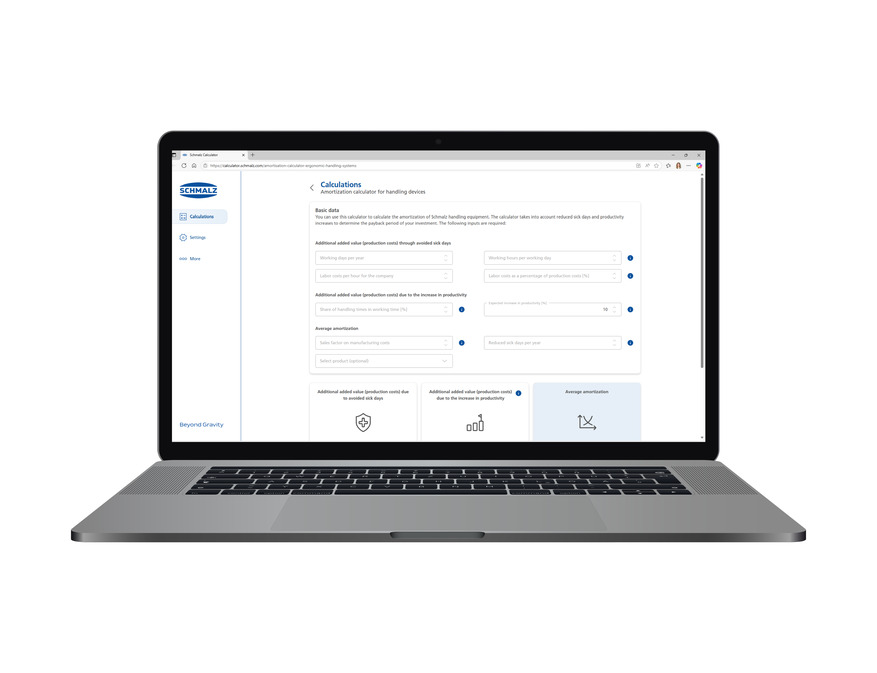
Use the amortization calculator to see when investing in a handling device becomes worthwhile.
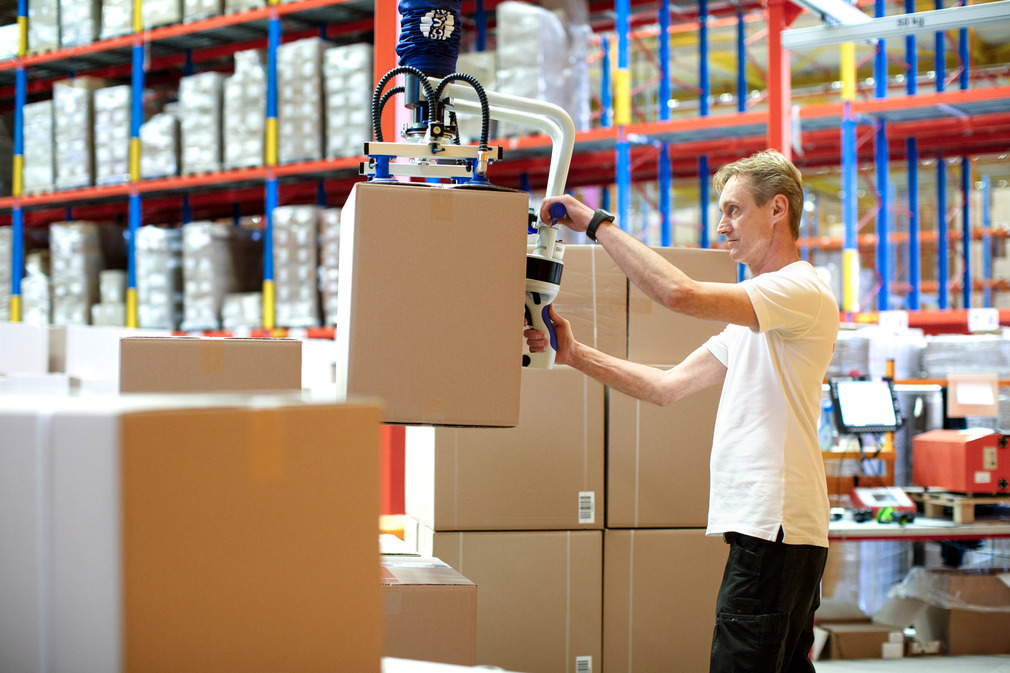
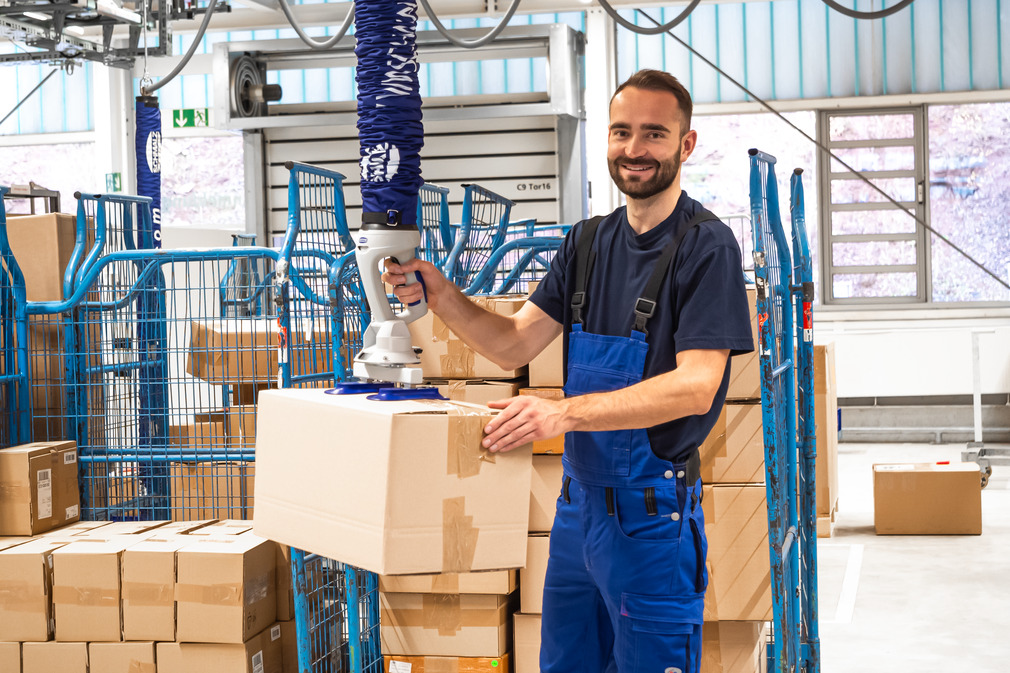
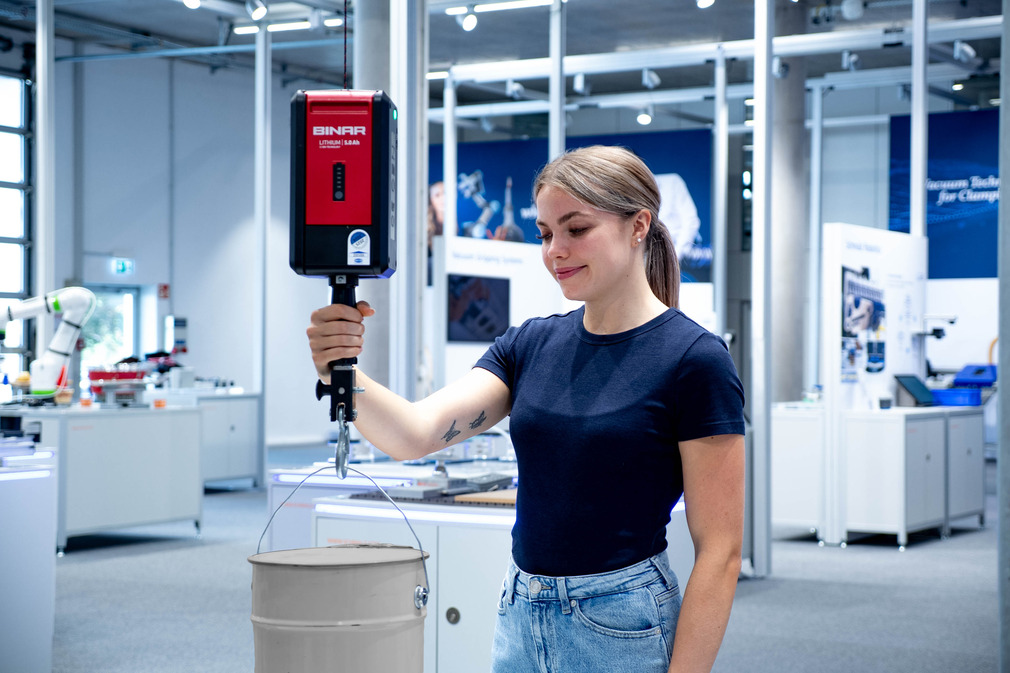
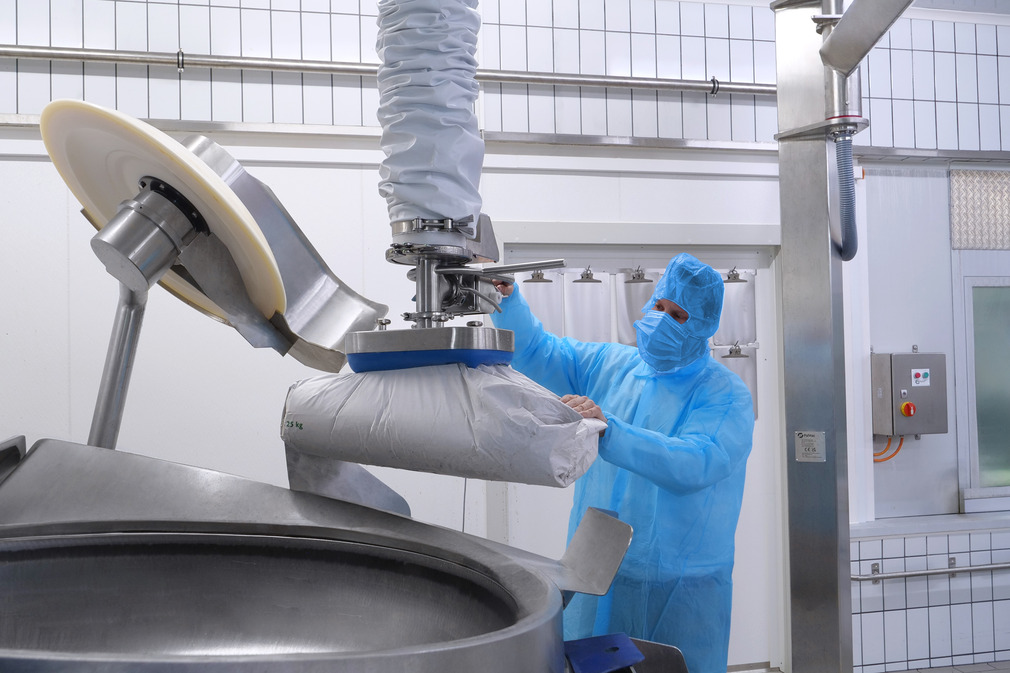
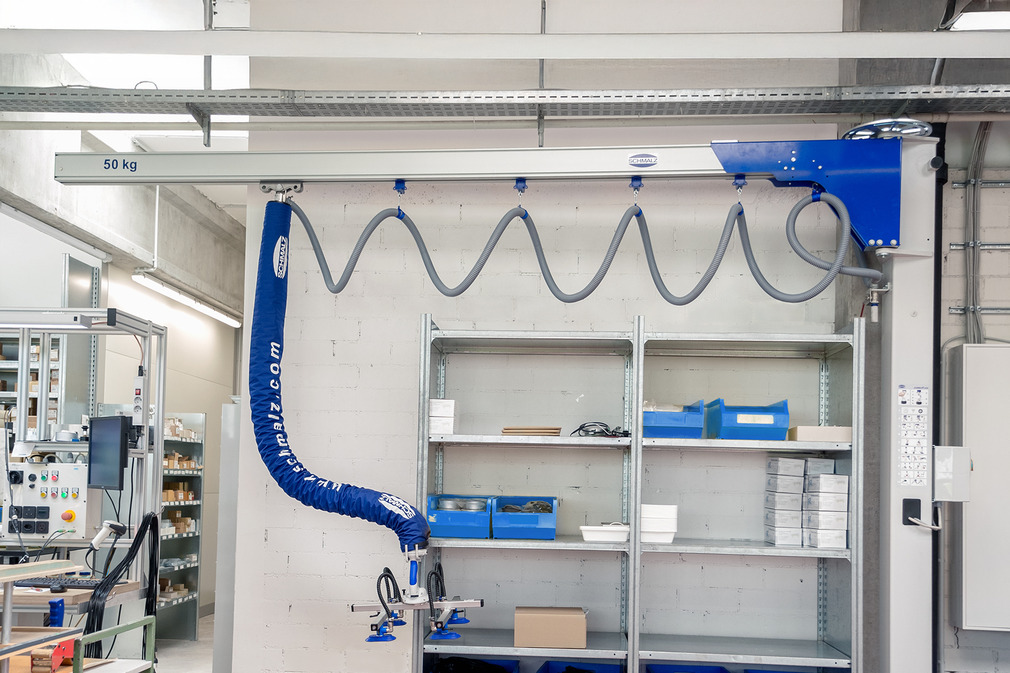
Ergonomic handling solutions from Schmalz improve working conditions and unleash the full potential of man and machine. This enables companies to lower costs, increase employee motivation and make work processes more efficient. The lifting aids are so sensitive that applications can place workpieces precisely and safely. The vacuum gripping principle protects the surfaces and prevents damage - for maximum quality and efficiency.
Where ergonomics meets practice, real success stories are born: With ergonomically designed handling systems, companies not only gain productivity - but also ease in their day-to-day work. Our best practices show how ergonomic solutions simplify work processes, relieve employees and enable measurable performance gains.
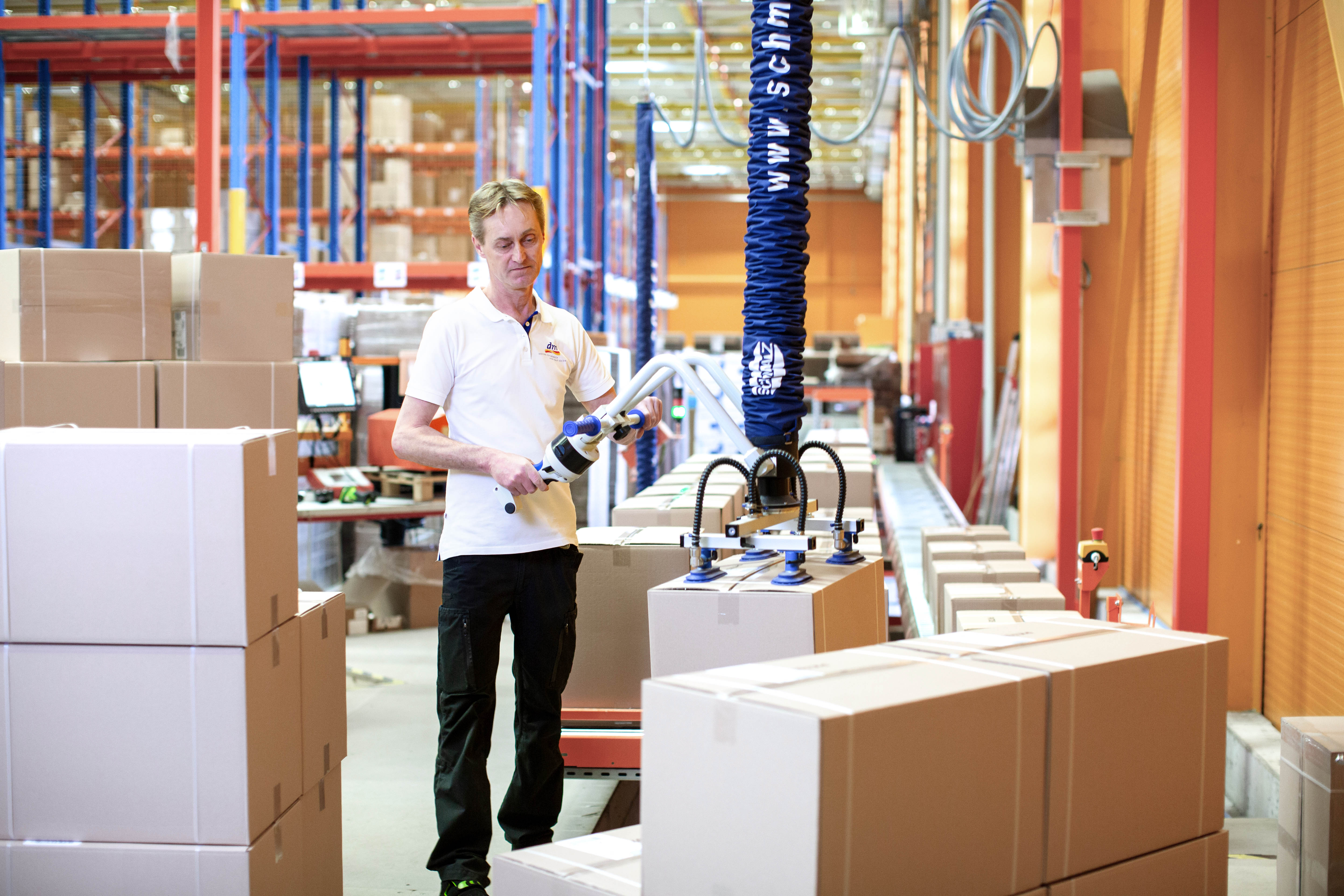
At dm, the vacuum lifters from Schmalz ensure noticeably faster and more efficient shipping processes. Less physical strain means less downtime and more power for everyday work.
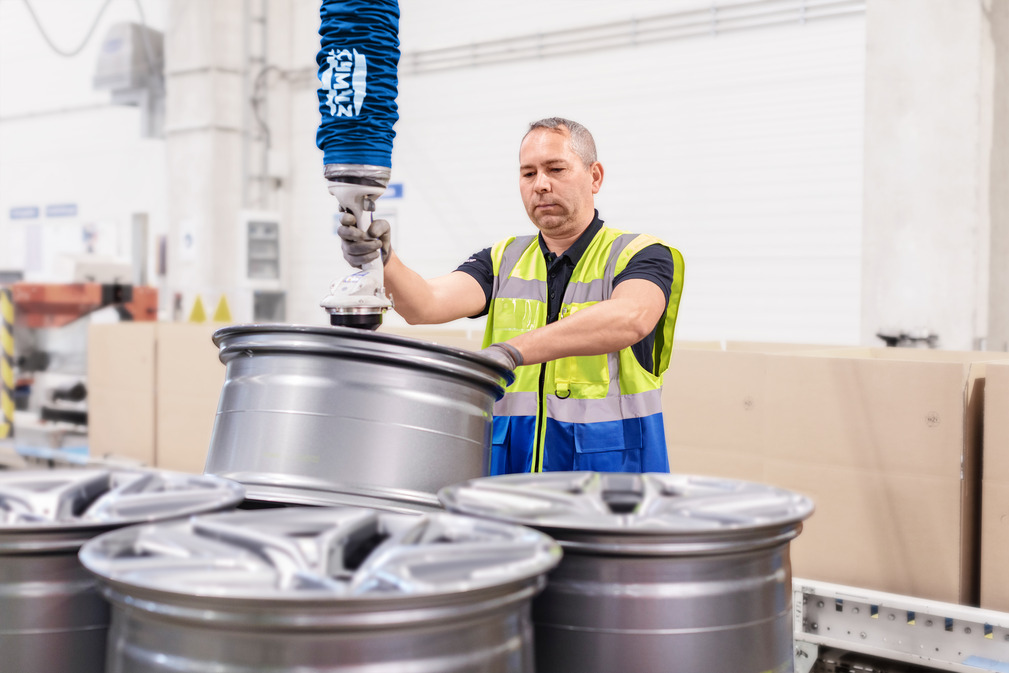
At Ronlog, ergonomic lifting technology ensures that materials flow smoothly, making everyday work noticeably easier. The smooth processes increase productivity and create a safe, healthy working environment.
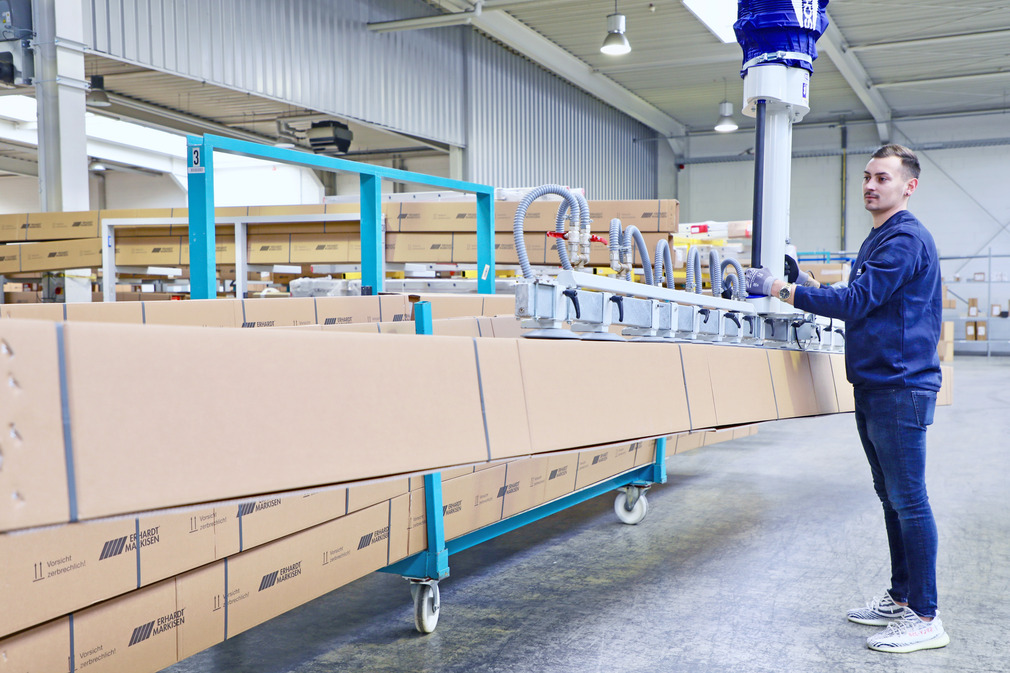
How can logistics be made more efficient and ergonomical at the same time? Schedler demonstrates how Schmalz vacuum lifters make exactly that possible: less physical strain, greater safety and noticeably faster workflows.
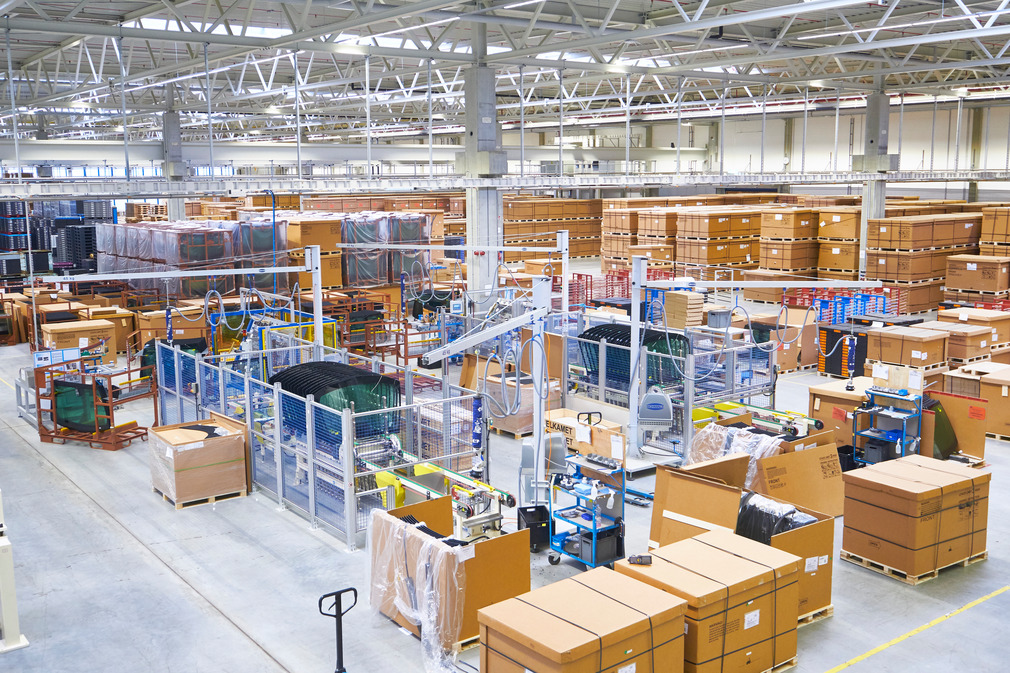
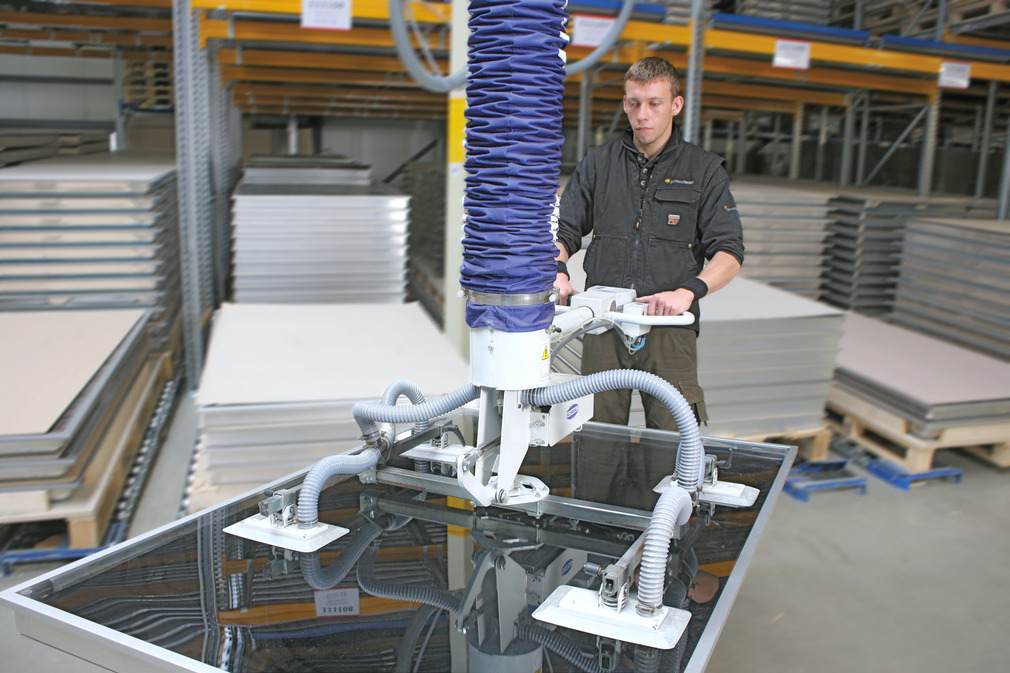
Fuyao optimizes automotive glass production through the use of lifting solutions. This solution reduces physical strain, minimizes downtime, increases precision in production and noticeably increases productivity.

Less back pain, more power: ergonomic working protects your employees and your company.

Musculoskeletal disorders are the main cause of employee absences. We show you how to minimize the risks.
For safe and compliant workplaces: Everything you need to know about occupational safety and standards can be found here.
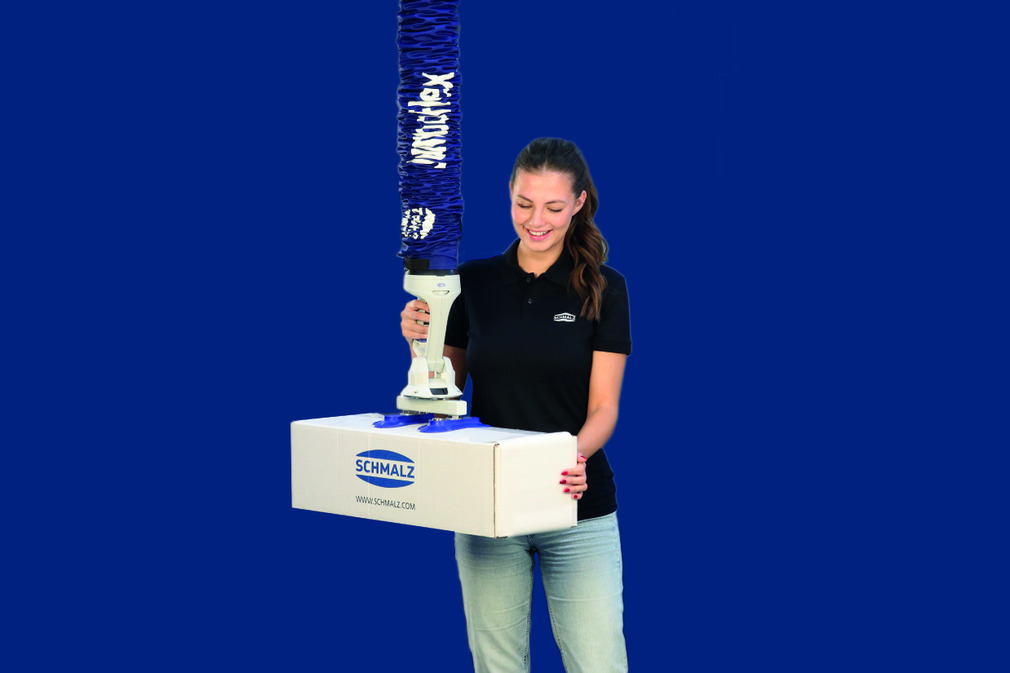
Ergonomic handling made easy: Discover our solutions here.

Johannes-Schmalz-Str.1
72293 Glatten
Germany
A lifting aid is economically viable as soon as the annual savings exceed the purchase and operating costs. In practice, this is often the case after 6 to 18 months for workstations with a high handling frequency or heavy loads.
To calculate this, compare the total investment with the annual savings. Three factors are taken into account:
The payback period is calculated by dividing the total investment by the annual net savings. Schmalz’s payback calculator is available for an initial assessment using your own key figures.
Significant variations in cycle times resulting from manual handling are usually not caused by differences in work effort, but rather by ergonomically deficient conditions in the workplace. Three factors are key:
An ergonomically standardized workstation equipped with vacuum lifting devices compensates for these physical differences and ensures consistently predictable cycle times throughout the entire shift.
Workstations involving manual handling can be made more ergonomically efficient without fully automating the process. The most effective approach is ergonomic partial automation: the technology takes over the load, while the operator retains control. Three key strategies:
These measures immediately lower physical strain, do not interfere with existing IT processes, and remain within manageable acquisition costs.