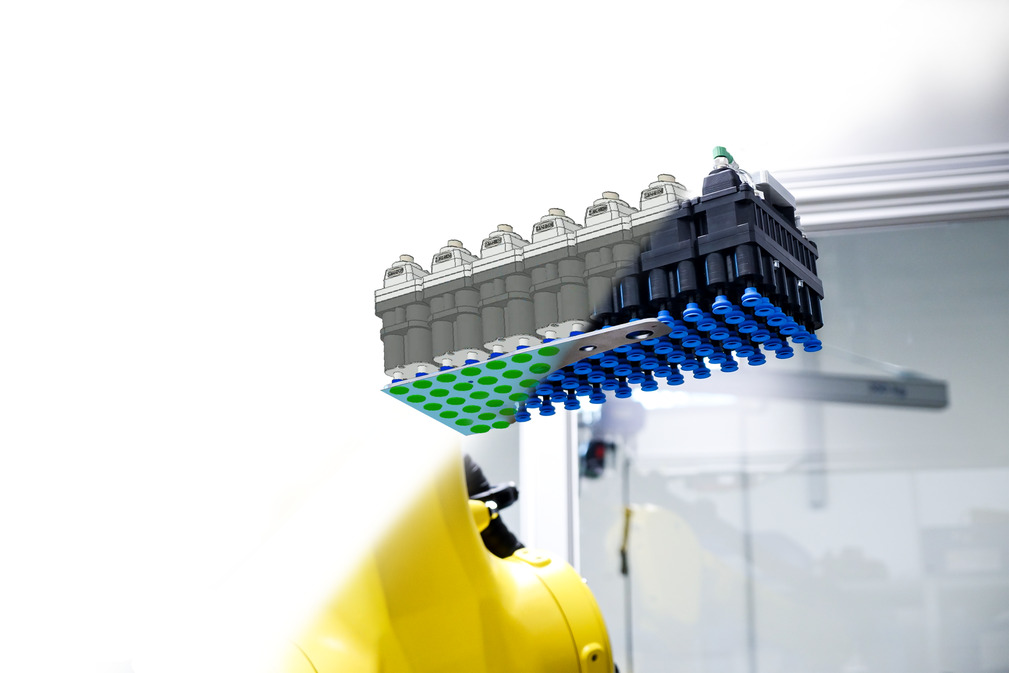

Engineering Process Simply Automated
80 % faster thanks to digital design of your gripping solution.
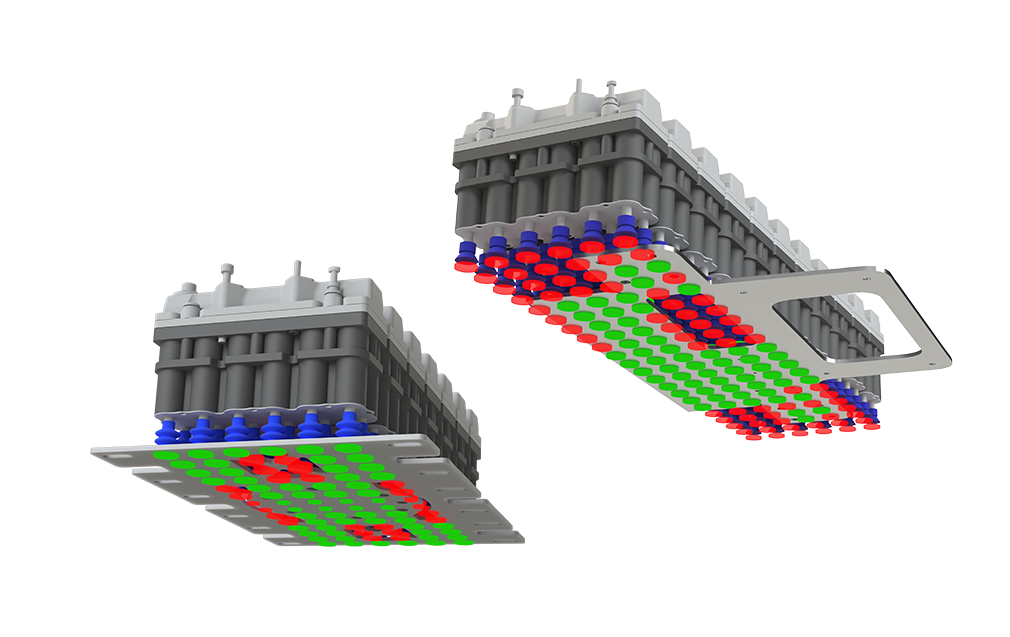
80 % faster thanks to digital design of your gripping solution.
The selection, design and engineering of gripping solutions is often a lengthy and complex process that ties up valuable resources. Increase the efficiency of your engineering process by up to 80 % with the Digital Engineering Service from Schmalz.
With our Digital Engineering Service, you can work faster and more reliably than with any manual analysis and remain cost-efficient, as the designed gripping solution focuses on your required core functionalities.
Design your tailored gripping solutions for sheet metal handling digitally and automatically – in a way that was simply not possible with conventional methods before due to the enormous volume of data and time required.
The result: You receive a digital design of your gripping solution that is optimally suited to automate your diverse handling processes.
Reduce your design time with automated digital design instead of manual analysis. Engineer your gripping solutions in record time.
Benefit from a design that takes geometries, thousands of gripping points, centers of gravity and holding forces into account.
Have cost-efficient gripping solutions designed that are optimally adapted to your workpieces and requirements through ideal alignment and customization.
Without any gripper changes and with significantly reduced set-up costs, the result of the digital design provides you with an application-specific and scalable solution for handling a wide range of components.
Schmalz's Digital Engineering Service sets new standards for automated engineering processes – faster, more reliable, and more cost-efficient than ever before. This empowers companies to significantly speed up their processes and actively shape the future with efficient, sustainable and intelligent gripping solutions.∼ Dr. Johannes Schmalz, Managing Shareholder
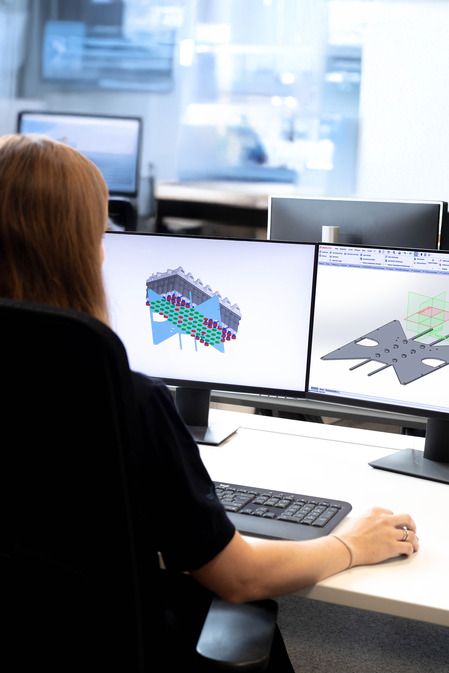
Upload the CAD data (STEP, DXF and all common 3D formats) of any number of different parts or enter simple parameters such as maximum and minimum values for length, width, height and weight.
In an iterative process, a model is designed and analyzed. Thousands of gripping points per uploaded part and the holding forces are taken into account and evaluated based on the center of gravity.

With just a few clicks, you will receive a reliable design of a solution that is tailored to your workpieces. Conveniently download the result or request your designed gripping solution directly.
Increased efficiency through digital design
Automated handling of 30 different workpieces in a 2D laser cutting application? That was the requirement of one of our customers.
We took on this challenge and enabled handling sheet metal with just one gripper in order to keep set-up times to a minimum. Our Digital Engineering Service carried out over 3 million gripping processes to develop an optimum gripping solution.
The benefits of the digital design at a glance:
These values are based on average values from previous customer analyses and show the potential of our digital solution for your processes.
Schmalz's digital gripper design process consists of four automated steps:
No, assemblies cannot be processed. Schmalz’s Digital Engineering Service requires only complete 3D single components as workpiece files.
CAD data requirements:
Your CAD data is fully protected at Schmalz and remains your property. The data is treated as strictly confidential and will not be disclosed to third parties. It is used exclusively for your individual gripper design and for the internal optimization of Schmalz’s calculation tools in accordance with Section 7 of Schmalz’s Terms and Conditions.
Schmalz's digital design solution is designed exclusively for the automated handling of flat 2D metal sheet components.
The design result is a preliminary static analysis intended for technical guidance; it is not a gripping system ready for immediate use. Since specific process and dynamic conditions (e.g., exact robot types, cycle times, or interfaces) are not taken into account, the determined gripper layout serves as a solid digital foundation for subsequent detailed planning with the experts at Schmalz.
As a result of Schmalz’s digital gripper design, you will receive a technical data package for preliminary planning. This includes:
No, a completed design cannot be edited retroactively. If the geometry of your workpiece changes, simply start a new analysis using the updated 3D CAD model. Schmalz will then recalculate the gripper layout from scratch.
No, dynamic acceleration forces are not taken into account in the automated basic analysis, as they depend on the specific process.
The Schmalz tool calculates gripper-based manipulability primarily using static calculations with a safety factor of 2 (SF = 2). For applications involving extremely high accelerations, the layout can subsequently be dynamically verified through a targeted special analysis conducted by Schmalz experts.