
By using the Quick-Lift systems, our processes have become significantly safer and more structured. The employees benefit from a noticeable reduction in workload and the processes can be carried out more reliably and efficiently.∼ Manuel Mayer, Process Team Manager High Speed Area Injection Pump Common Rail
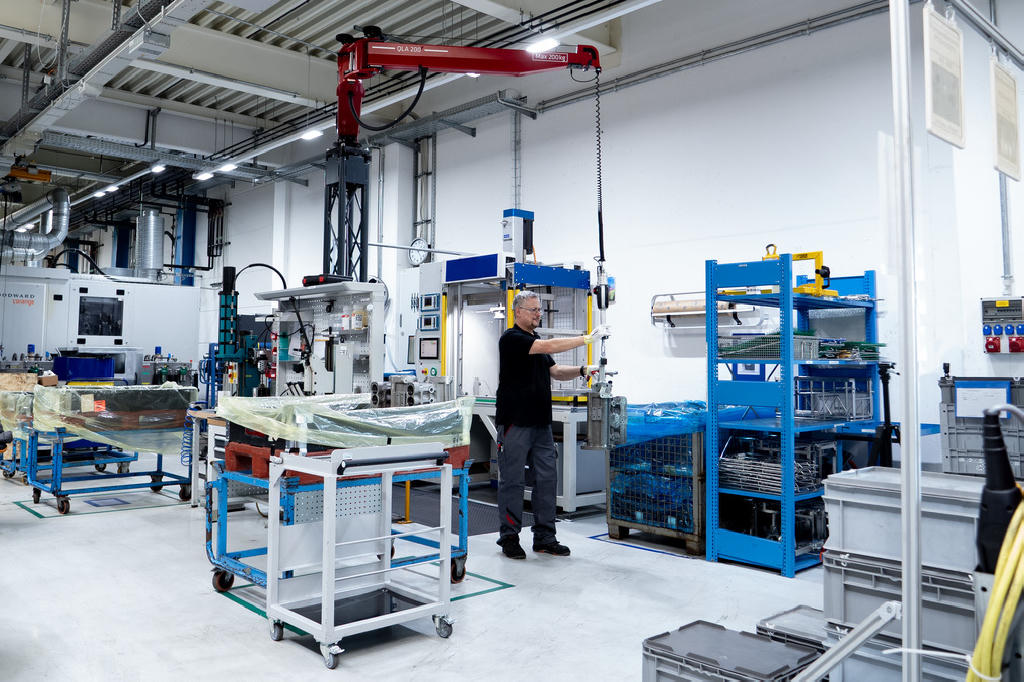
More Efficiency and Ergonomics: Woodward L'Orange Relies on Smart Hoists from Binar Handling
In the production of engine components, Woodward L’Orange performs hundreds of lifting operations every day. To meet these demands, the company needed a solution that combines safety, efficiency, and ergonomics. With the Quick‑Lift systems from Binar Handling, a company of the Schmalz Group, Woodward L’Orange successfully meets this challenge—reducing strain, accelerating processes, and increasing overall productivity.
Rysy úspěšného příběhu
| Průmysl | Metal |
|---|---|
| Obrobek | Motor components |
| Skupina výrobků | Binar Handling Quick-Lift Arm QLA |
| Typ manipulace | Manual Handling |
Se společností Schmalz
50
percent
less physical strain
30
percent
more productivity
25
percent
less sick leave
20
percent
fewer accidents at work
Zákazník: Woodward L'Orange GmbH
Woodward L'Orange GmbH is one of the world's leading suppliers of injection and control systems for large engines with power in kW of up to 40,000. The company employs round 1,300 employees in Germany and is part of the international Woodward Group with over 8,300 employees worldwide. The portfolio includes digital controls, mechanical and electronic control systems and modern common rail injection technology. The products are used in ships, power plants, railroads and heavy vehicles worldwide. Woodward L'Orange stands for innovative technology, high quality and custom-made solutions in the engine industry.
Výzva
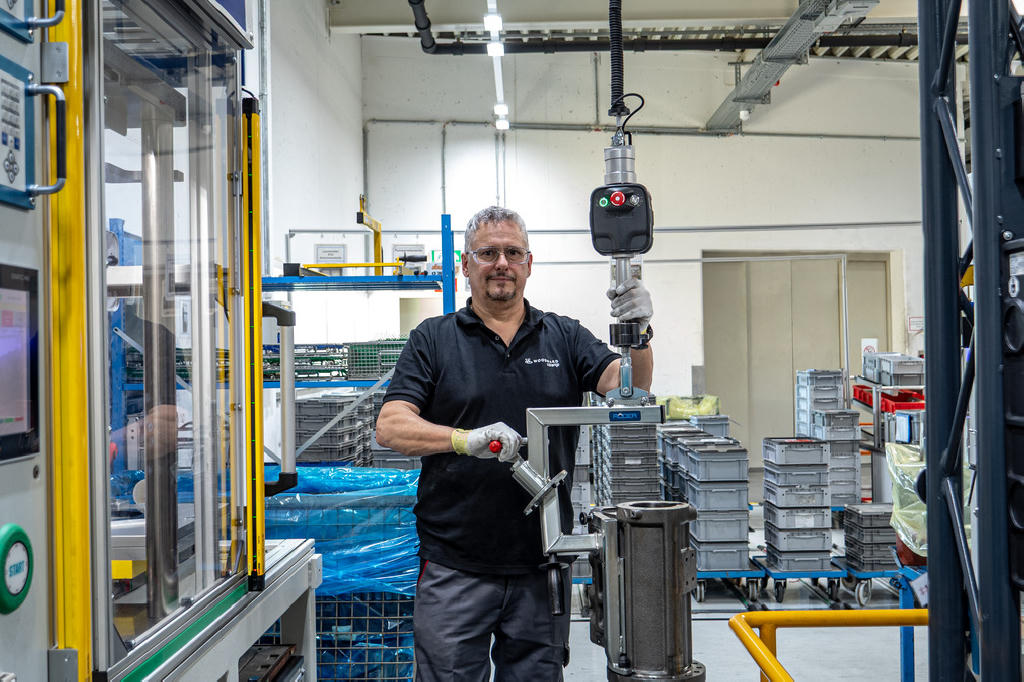
Numerous lifting operations take place every day in Woodward L'Orange's production facility. These include around 150 pump housings (38 to 70 kg), 100 connection pieces (20 to 29 kg) and 50 camshafts (approx. 11 kg). Manually handling these heavy and differently shaped components placed significant physical strain on employees while also requiring great care to avoid damage to the workpieces. To ensure a safe and efficient production process, Woodward L’Orange needed a lifting solution capable of flexibly handling various components, enabling precise movements, meeting strict safety requirements, and providing ergonomic relief. Equally important were compatibility with the existing infrastructure as well as low maintenance and cost‑efficient operation.
Řešení od společnosti Schmalz
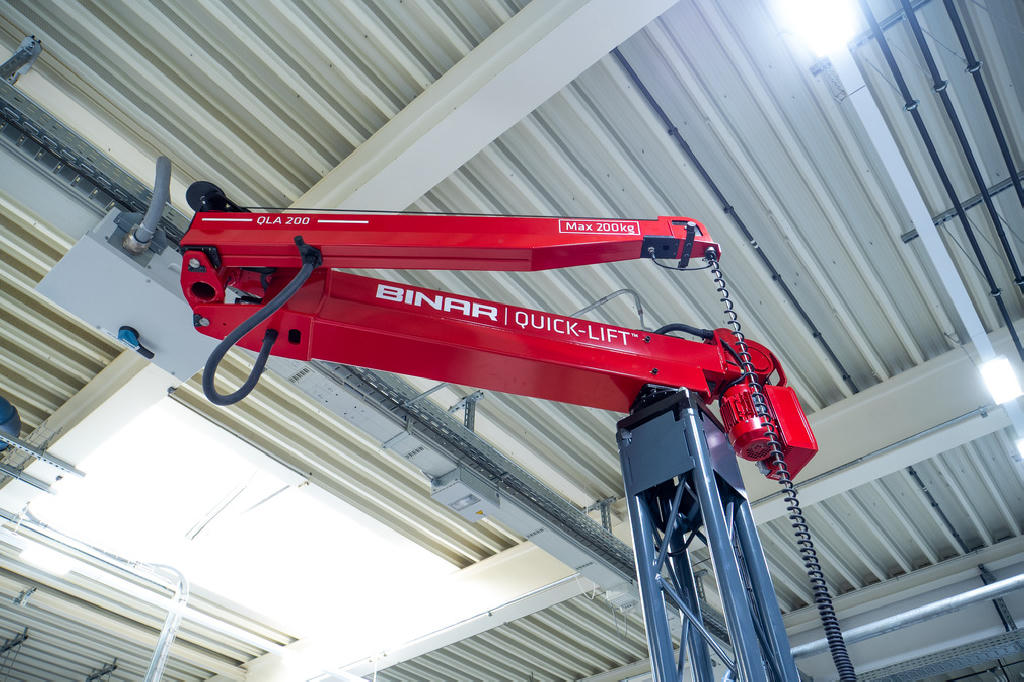
Woodward L’Orange chose several Quick‑Lift Arm (QLA) systems from Binar Handling, a company of the Schmalz Group. The QLA is an intelligent electric lifting device that enables highly ergonomic, safe, and effortless handling of workpieces. Its patented control handle responds sensitively to even the smallest hand movements, requiring only minimal force to lift or lower loads, which stop immediately when the operator releases the handle. The modular lift arms, with load capacities ranging from 50 to 300 kilograms, can be mounted flexibly on floor pillars or ceiling structures and equipped with standard or custom‑designed grippers. In the production of common‑rail injection pumps, Woodward L’Orange uses a total of five Quick‑Lift Arm units: two QLA 100 and two QLA 125 systems with load capacities of 100 and 125 kilograms respectively, handling medium to heavy pump housings and connection pieces. They provide motorized, controlled, and precise positioning of components and are designed for high cycle rates. The QLA 200, with a load capacity of 200 kilograms, handles the heaviest components in the process and delivers maximum precision and sensitivity despite the higher load weight. The implementation of the Quick‑Lift systems was carried out in stages and carefully planned. The project team considered the spatial conditions and the specific handling requirements of different components. Employees were involved early and trained thoroughly. A testing phase ensured that the systems could be seamlessly integrated into existing workflows. The results speak for themselves: employee physical strain has been reduced by up to 50 percent, while overall process speeds have increased by up to 30 percent. At the same time, workplace safety has improved measurably, reflected in roughly 20 percent fewer work‑related accidents. The number of sick‑leave cases has also dropped by approximately 25 percent. Furthermore, workflows now benefit from a more stable material flow and faster order processing.
Výhody pro zákazníky díky řešení Schmalz
Less physical strainMotorized lifting technology reduces physical strain and enables more ergonomic work
Higher productivityMeasurable performance gains through faster processes and accelerated workflows
Improved safetyFewer accidents at work and less damage to sensitive components
Higher availabilityFewer absences due to illness increase the stability of the entire operational process
Produkty použité v aplikaci

Smart Hoists Quick-Lift Arm QLA
- Lift capacity up to 300 kg
- Sensitive and precise positioning of different workpieces
- Slewing range of the jib 360°