NIOSH Lifting Equation
The NIOSH Lifting Equation can be used to objectively assess the physical strain involved in manual lifting of loads. The result of the calculation is the NIOSH Ergonomic Score - officially known internationally as the Lifting Index (LI), but commonly referred to in everyday German workplace practice simply as the NIOSH Index.

How does the NIOSH lifting formula measurement method work?
To objectively measure the risk of musculoskeletal disorders, the NIOSH lifting formula calculates the Recommended Weight Limit (RWL) for a specific lifting task.
The model is based on a theoretical ideal value of 23 kg. This base value is adjusted downward by six practical parameters whenever working conditions deviate from the ideal:
- Geometry: Horizontal and vertical distance of the load from the body, and the vertical lifting distance.
- Ergonomics: Angle of rotation of the upper body (asymmetry) and quality of the hand grips.
- Process: Lifting frequency (number of lifting operations per minute) and total duration of the activity.
NIOSH Ergonomic Score (Lifting Index)
If you compare the actual weight lifted to the calculated maximum weight, you get the Lifting Index (LI) or Ergonomic Score:
Lifting Index (LI) = Actual Weight / Recommended Maximum Weight (RW L)
The results directly show occupational safety managers where action is needed:
| Lifting Index (LI) | Risk Level | Action Required |
|---|---|---|
| LI ≤ 1.0 | Low (Green) | The risk is low. The workplace is considered safe. |
| 1.0 < LI < 3.0 | Elevated (Yellow) | Ergonomic improvements are strongly recommended. |
| LI ≥ 3.0 | High (Red) | High health risk. Immediate action required. |
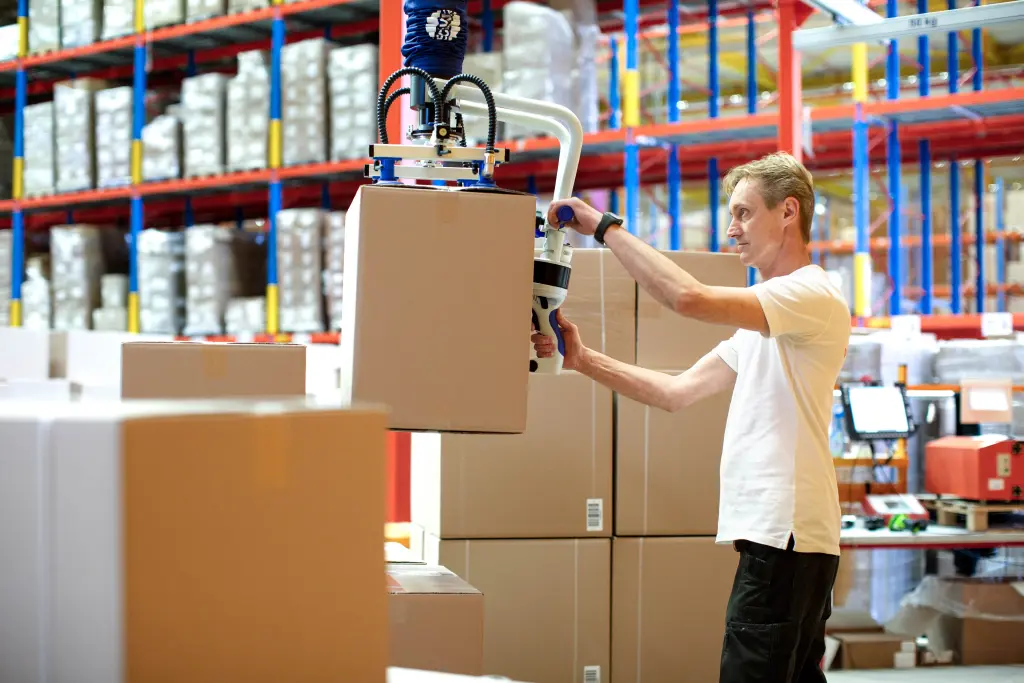
Sustainably Lower the NIOSH Ergonomic Score with Schmalz
A Lifting Index (LI) greater than 1.0 indicates an immediate need for action. The use of vacuum lifting aids effectively optimizes the NIOSH score:
- Reduce lifting strain: Vacuum lifting aids take on the majority of the load’s weight and reduce physical strain during lifting and carrying.
- Support ergonomically designed work positions: Guided load movements and ergonomically designed operating concepts reduce awkward postures, twisting motions, and critical gripping heights.
- Safely handle high handling frequencies: Physical strain remains significantly lower even during repetitive lifting operations.
Related terms
Frequently asked questions
What does NIOSH stand for?
The acronym NIOSH stands for the National Institute for Occupational Safety and Health. It is a U.S. government agency dedicated to occupational health research that operates under the Centers for Disease Control and Prevention (CDC).
NIOSH’s research findings serve as the scientific basis for the mandatory guidelines issued by the U.S. Occupational Safety and Health Administration (OSHA).
What is the purpose of the NIOSH lifting equation?
The goal of this method is to prevent work-related musculoskeletal disorders—particularly in the lumbar spine—through the objective assessment of manual lifting tasks.
What is the difference between the NIOSH lifting equation and the ISO 11228-1 standard?
The NIOSH Ergonomic Score is the actual mathematical method used to calculate ergonomic stress. DIN EN ISO 11228-1 is the overarching European and international standards framework. Since the ISO standard is designed on the NIOSH calculation logic, both systems are considered globally compatible.

Occupational safety and standards
For safe and compliant workplaces: Everything you need to know about occupational safety and standards can be found here.
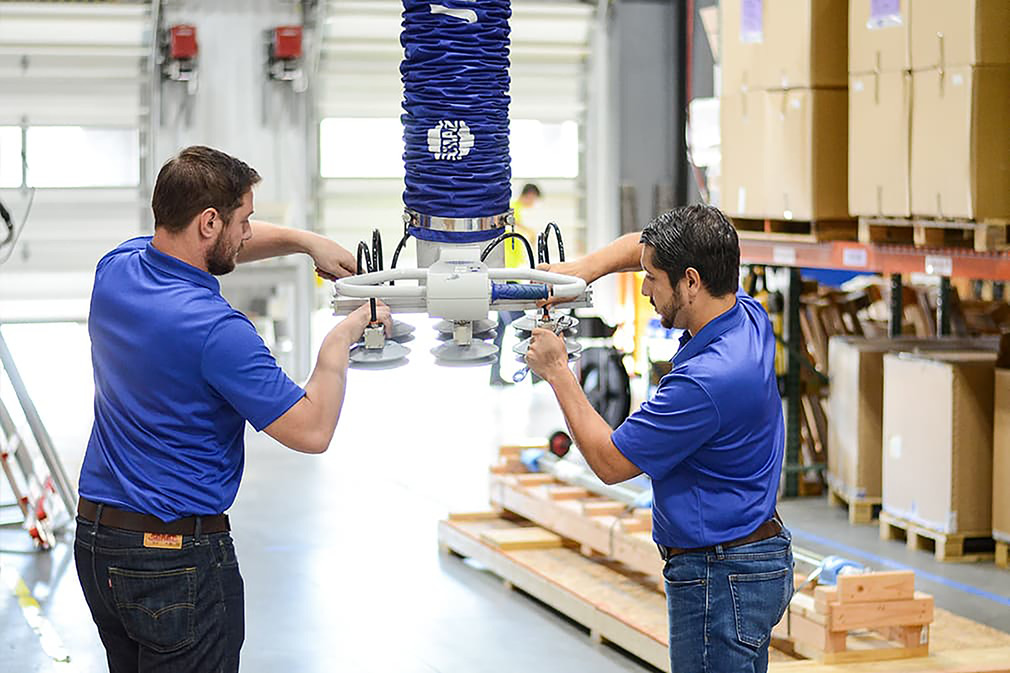
Maintenance and regular inspection
Preventive maintenance and regular inspections keep your system safe and ready.

Quality and Warranty
Schmalz has very high standards when it comes to the quality of its products and services. Numerous certifications in accordance with the DIN ISO standard attest to the quality of the products.